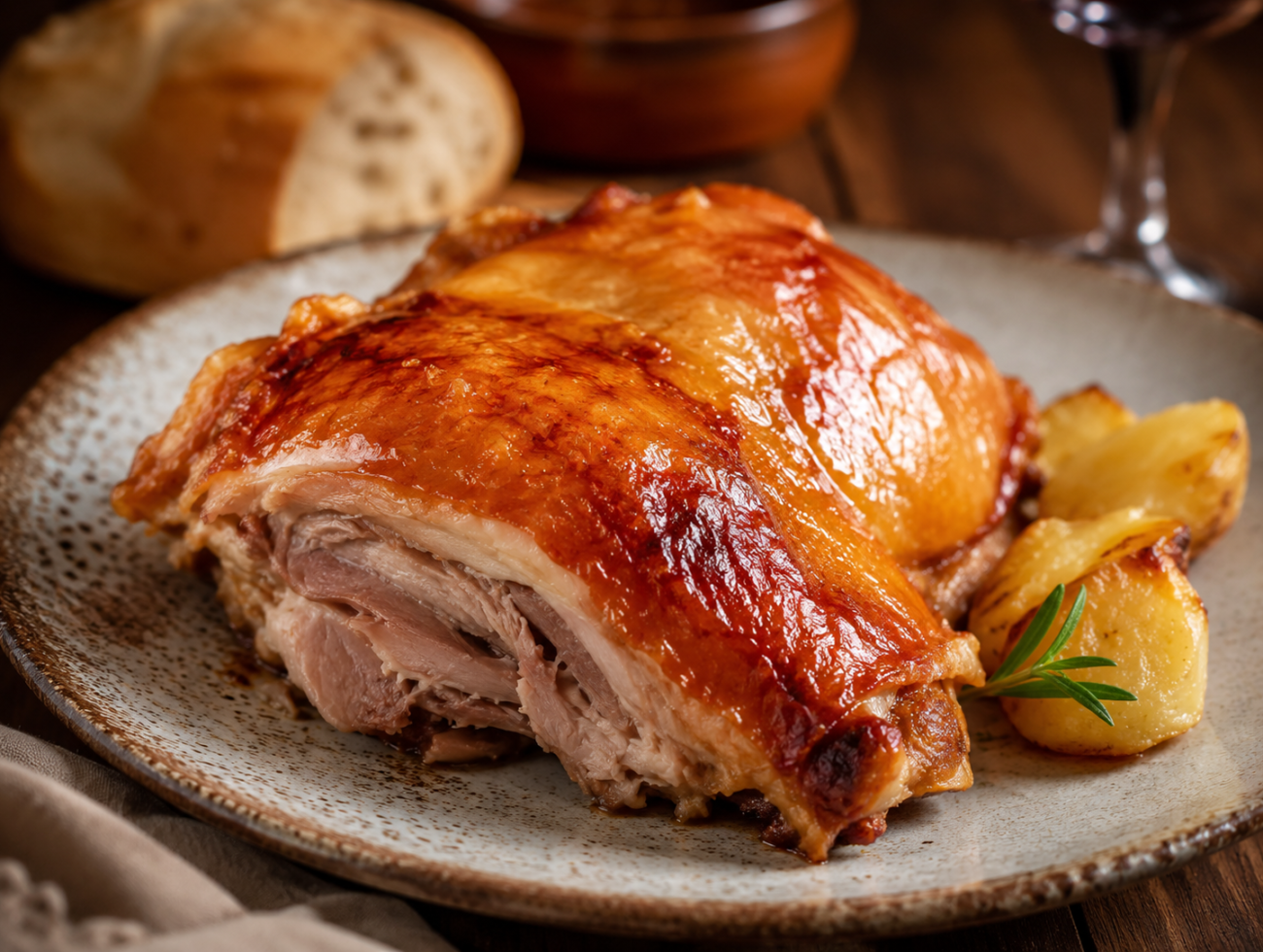
Cochinillo asado is one of Castile's most celebrated roasts, prized for its contrast between delicate, juicy pork and exceptionally crisp, brittle skin.
This home-oven method uses a pan of water to create humidity during the first stage, followed by skin-side-up roasting and a brief broil to produce the characteristic golden crust.
Why You’ll Love This Recipe
- The ingredient list is exceptionally short, allowing the mild flavor of the suckling pig to remain the focus.
- A humid roasting environment protects the lean young meat from drying out during the long cooking time.
- Turning the pig for the final stage gives the skin direct exposure to heat so it browns evenly.
- The brief broiling step creates crisp, blistered skin without overcooking the tender interior.
- Its dramatic presentation makes it especially suitable for Christmas, holidays, and large family celebrations.
Ingredient Notes
Whole suckling pig
Choose a cleaned piglet weighing less than 8 3/4 pounds so it can lie open inside a standard oven. Ask the butcher to split it lengthwise and remove any remaining hair.
Pork lard
A thin coating of softened lard helps the exterior brown and crisp. Rendered pork lard is often available near shortening or at Latin and specialty markets.
Salt
Season both the meat and skin evenly, but avoid applying a very thick layer because the roast reduces slightly and its flavor becomes more concentrated.
Water
The water sits below the pig rather than touching it. It creates steam, moderates the oven environment, and prevents the rendered juices from scorching.
Expert Tips
- Measure the inside of the oven and roasting pan before ordering the pig so the opened carcass will fit without pressing against the oven walls.
- Dry the skin thoroughly before applying the lard because surface moisture delays browning and can prevent a brittle finish.
- Place a rack between the pig and the water so the meat roasts rather than braises.
- Check the water level periodically and add more hot water when necessary, avoiding cold water that would lower the oven temperature.
- Protect the ears and tail with small pieces of foil if they begin browning significantly faster than the rest of the skin.
- Watch the roast constantly during broiling because the crisp skin can change from golden to burned in less than a minute.
Serving Suggestions
Serve the suckling pig with a simple salad of crisp lettuce and tomato dressed lightly with olive oil and vinegar to balance the richness of the meat.
For a more substantial Castilian meal, accompany it with roasted potatoes, sautéed peppers, or a platter of seasonal roasted vegetables.
Storage and Reheating
Remove any remaining meat from the bones and refrigerate it in an airtight container within 2 hours for up to 3 days. Store large pieces with the skin facing upward to help preserve its texture. Reheat uncovered on a rack in a 375°F (190°C) oven until the meat reaches 165°F (74°C), then broil briefly if the skin needs additional crisping. Avoid microwaving skin-on portions because the skin will soften. Cooked meat can be frozen for up to 3 months, although the thawed skin will not remain as crisp.
Frequently Asked Questions
Where can I buy a whole suckling pig in the United States?
Order one from a specialty butcher, local pig farm, Spanish or Latin food supplier, or a meat distributor that handles whole animals. Several days or weeks of advance notice may be required.
How do I keep the suckling pig from drying out?
Roast it over a pan of water, maintain a moderate oven temperature, and avoid cooking it longer than necessary after the thickest portions are tender and safely cooked.
Why is the skin not becoming crispy?
The skin may have been too wet, touched the water, or received insufficient direct heat. Pat it dry before roasting and finish it skin-side up under the broiler.
Can roast suckling pig be prepared ahead?
It is best roasted shortly before serving because the skin gradually loses its crispness. The pig can be cleaned, dried, seasoned, and refrigerated uncovered several hours ahead, then coated with lard before roasting.
CuisineSpanish (Castilian) CourseMain Course Yield6 servings NutritionApprox. 930 calories per serving
Ingredients
- 1 cleaned whole suckling pig, no more than 8 3/4 pounds (4 kg), split open lengthwise by the butcher
- 1 tablespoon kosher salt, or to taste
- 1 teaspoon freshly ground black pepper, or to taste
- 1 3/4 tablespoons (25 g) pork lard, softened
- 4 to 6 cups (950 ml to 1.4 liters) hot water, for the roasting pan
Instructions
- Remove the suckling pig from the refrigerator about 30 minutes before roasting and pat the entire surface thoroughly dry with paper towels.
- Preheat the oven to 375°F (190°C). Season the meat and skin evenly with the salt and black pepper, then rub the softened pork lard over the exterior.
- Place the pig rib-side up on a large oven rack positioned over a deep roasting pan. Pour enough hot water into the lower pan to create a shallow layer without allowing the water to touch the meat.
- Roast for 90 minutes, maintaining water in the lower pan so the oven remains humid and the drippings do not burn.
- Carefully turn the suckling pig skin-side up, keeping the skin intact, and continue roasting at 375°F (190°C) for 30 to 40 minutes.
- Check that the thickest part of the shoulder or hind leg has reached at least 145°F (63°C), without the thermometer touching bone.
- Switch the oven to broil and cook for about 4 minutes, watching continuously, until the skin is evenly blistered, deeply golden, and crisp.
- Remove the pig from the oven and let it rest uncovered for at least 10 minutes before portioning so the juices redistribute without softening the skin.
Notes
The calorie estimate assumes a suckling pig weighing about 7 3/4 pounds (3.5 kg), approximately 4.2 pounds (1.9 kg) of cooked edible meat and skin, about 15 g of the applied lard remaining on the finished roast, and six equal servings.
A whole suckling pig usually needs to be ordered in advance from a specialty butcher, Spanish food supplier, Latin market, or local farm in the United States.
Ask the butcher to clean the pig thoroughly and split it open lengthwise so it lies flat and fits inside a standard home oven.
If a whole suckling pig is unavailable, a skin-on pork shoulder can be roasted with a similar humid-roasting and final-broiling method, although it will not reproduce the delicate flavor or traditional presentation.
The pig is safe to eat when the thickest parts reach at least 145°F (63°C) and rest for at least 3 minutes, but the meat should also feel tender when pierced.

 Main Dishes