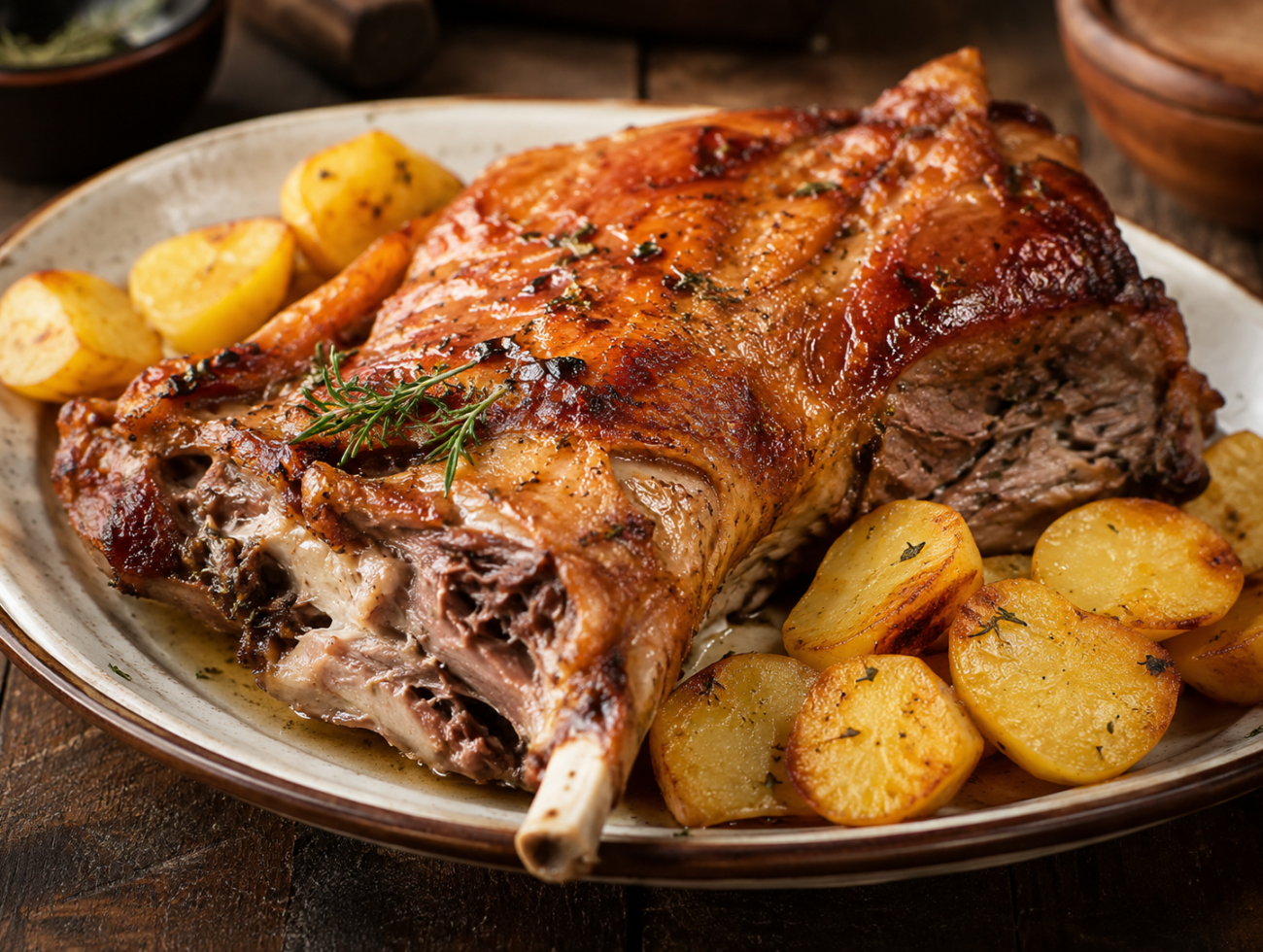
Paletilla de cordero lechal asada is a classic Spanish celebration dish featuring exceptionally tender milk-fed lamb roasted with little more than salt, garlic, pork lard, water, and mild vinegar.
Slow roasting and frequent turning allow the shoulders to cook evenly, while brushing them with the vinegar mixture creates a glossy golden exterior and keeps the pan juices from scorching.
Why You’ll Love This Recipe
- The short ingredient list allows the delicate flavor of suckling lamb to remain the focus.
- Slow roasting produces tender meat that begins to separate naturally from the bone.
- The water and vinegar mixture keeps the roasting environment humid without turning the dish into a braise.
- Regular turning and basting create an evenly browned, glossy exterior.
- The recipe is naturally free from gluten, wheat, dairy, eggs, nuts, soy, sesame, fish, and shellfish.
Ingredient Notes
Suckling lamb shoulders
Choose the smallest front shoulders available, ideally from milk-fed lamb. Their meat is paler, milder, and more delicate than standard lamb shoulder.
Pork lard
A thin coating helps the shoulders brown while complementing the flavor of the lamb. Rendered pork lard is commonly available at Latin markets, butcher shops, and some US supermarkets.
Mild vinegar
White wine vinegar adds gentle acidity and helps create a bright, glossy surface. Apple cider vinegar is the best widely available substitute.
Garlic
One finely chopped clove adds a restrained savory aroma without overwhelming the mild lamb. Spread it evenly so concentrated pieces do not burn.
Salt
Season the shoulders evenly before roasting. The pan juices reduce during cooking, so it is better to begin modestly and adjust at the table if necessary.
Expert Tips
- Ask the butcher specifically for front shoulders from suckling or milk-fed lamb rather than larger shoulders from older animals.
- Use a roasting dish that holds the shoulders closely without stacking them, since an oversized pan allows the basting liquid to evaporate too quickly.
- Reduce the oven temperature immediately after placing the lamb inside so the meat cooks gently and remains juicy.
- Turn the shoulders approximately every 20 minutes and handle them carefully to avoid tearing the tender exterior.
- Add more water and vinegar mixture whenever the bottom of the pan looks dry, but do not pour enough liquid over the lamb to boil it.
- Cook until the meat visibly recedes from the bone and feels tender when pierced, not merely until it reaches the minimum safe temperature.
Serving Suggestions
Serve each lamb shoulder with a crisp green salad dressed with olive oil and vinegar to balance the richness of the roast.
For a more substantial meal, accompany the lamb with roasted potatoes, potatoes cooked with onions, sautéed peppers, or simple seasonal vegetables.
Storage and Reheating
Remove leftover meat from the bones and refrigerate it with the pan juices in an airtight container within 2 hours. Store for up to 3 days. Reheat covered in a 325°F (165°C) oven with a spoonful of water or broth until the meat reaches 165°F (74°C), then uncover briefly to refresh the browned exterior. Avoid prolonged microwave reheating, which can dry the delicate meat. Cooked lamb can be frozen with its juices for up to 3 months.
Frequently Asked Questions
What is suckling lamb?
Suckling lamb is a very young lamb raised primarily or exclusively on its mother's milk. It has smaller joints, pale tender meat, and a milder flavor than older lamb.
Can I make this recipe with regular lamb shoulder?
Yes, but choose the smallest bone-in shoulders available and expect a stronger flavor and longer cooking time. Roast until the meat is tender and pulling away from the bone.
Why is vinegar added to the roasting liquid?
The diluted vinegar balances the richness of the lamb, helps create a glossy browned surface, and keeps the pan juices from becoming overly heavy.
How do I know when the lamb shoulder is done?
The meat should be deeply browned, tender when pierced, and beginning to recede from the bone. It must reach at least 145°F (63°C), but lamb shoulder is usually more tender around 185°F to 195°F (85°C to 91°C).
CuisineSpanish (Castilian) CourseMain Course Yield2 servings NutritionApprox. 900 calories per serving
Ingredients
- 2 small suckling lamb shoulders, about 1 to 1 1/4 pounds (450 to 570 g) each
- 1 garlic clove, peeled and finely chopped
- 1 tablespoon (14 g) pork lard, softened
- 1 teaspoon kosher salt, or to taste
- 1/3 cup (75 ml) water
- 1 tablespoon plus 2 teaspoons (25 ml) mild white wine vinegar or apple cider vinegar
Instructions
- Remove the lamb shoulders from the refrigerator about 30 minutes before roasting and pat them dry with paper towels.
- Preheat the oven to 355°F (180°C). Rub the lamb shoulders evenly with the softened pork lard, chopped garlic, and salt, then arrange them in a roasting dish, preferably an earthenware casserole.
- Combine the water and vinegar in a small bowl and pour half of the mixture into the bottom of the roasting dish without washing the seasoning from the meat.
- Place the lamb in the oven, immediately reduce the temperature to 320°F (160°C), and roast for about 90 minutes.
- Turn the shoulders every 20 minutes so they brown evenly, brushing them with the water and vinegar mixture and adding more to the bottom of the dish whenever it begins to dry.
- Continue roasting until the meat is deeply golden, very tender, and beginning to pull away from the bones.
- Check the thickest part of each shoulder with an instant-read thermometer without touching the bone. The lamb must reach at least 145°F (63°C), although shoulder meat becomes more tender when cooked to approximately 185°F to 195°F (85°C to 91°C).
- Remove the lamb from the oven, rest it loosely covered for 10 minutes, and serve with the juices from the roasting dish.
Notes
The calorie estimate assumes two lamb shoulders weighing about 2 1/4 pounds (1.02 kg) in total, approximately 55 percent cooked edible meat and fat after accounting for bones and moisture loss, and about 10 g of the pork lard remaining on the finished roast. The estimated total is about 1,800 calories divided between two servings.
Suckling lamb, also sold as milk-fed lamb or lechal, may need to be ordered from a specialty butcher, Spanish food supplier, halal butcher, or local lamb producer in the United States.
When true suckling lamb is unavailable, use two of the smallest bone-in lamb shoulders available. Older lamb has a stronger flavor and may require additional roasting time.
White wine vinegar provides a mild flavor similar to the traditional preparation. Apple cider vinegar is a practical US alternative, but avoid strongly flavored distilled vinegar.
The liquid should remain beneath the lamb rather than covering it, allowing the meat to roast while the humid environment helps keep it juicy.

 Main Dishes