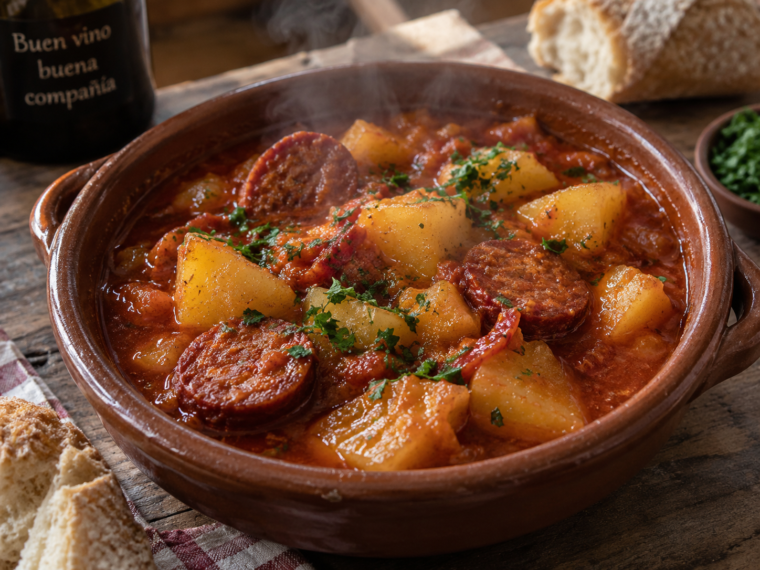
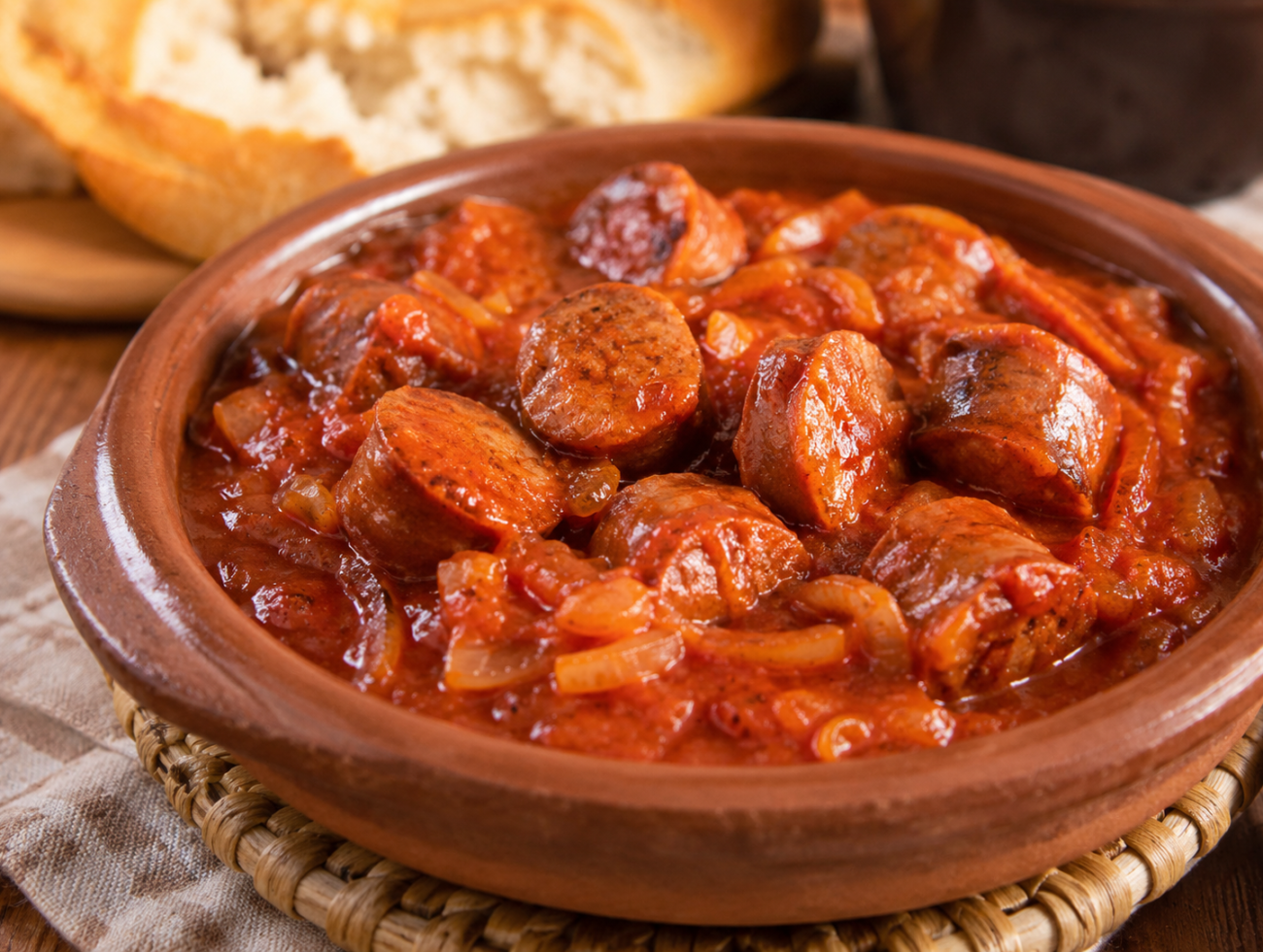
This Spanish sausage and potato stew transforms inexpensive everyday ingredients into a satisfying one-pot meal. Fresh pork sausages are browned before simmering with potatoes in a rich sauce made from onion, garlic, diced tomatoes, white wine, and Spanish paprika.
Browning the sausages and potatoes first builds a deeper flavor while helping both ingredients hold their shape in the sauce. The finished stew is comforting enough for colder days but quick enough to prepare for a regular weeknight dinner.
Why You’ll Love This Recipe
- Fresh pork sausages make the tomato and paprika sauce especially savory and satisfying.
- Browning the potatoes before simmering gives them extra flavor while keeping their centers tender.
- White wine lifts the rich tomato sauce and loosens the flavorful browned bits from the pot.
- The entire meal cooks in one pot and is ready in about 40 minutes.
- The sauce can be adjusted easily with extra broth or a mashed potato depending on the desired consistency.
Ingredient Notes
Fresh pork sausages
Use uncooked mild pork links rather than precooked hot dogs. Butcher-made sausages usually provide the best texture and release flavorful juices into the sauce.
Potatoes
Yukon Gold or another all-purpose potato works particularly well because it becomes tender without falling apart too quickly. Cut the pieces evenly so they finish cooking at the same time.
Diced tomatoes
Canned diced tomatoes provide both texture and liquid for the sauce. Ripe fresh tomatoes can also be peeled, chopped, and cooked until well reduced.
Spanish paprika
A mixture of sweet and hot paprika gives the stew color, warmth, and gentle spice. Add it away from direct high heat because paprika can turn bitter when burned.
Dry white wine
Choose an unsweetened wine such as Verdejo, Albariño, Sauvignon Blanc, or Pinot Grigio. Avoid salted products labeled cooking wine.
Chicken broth
A mild chicken broth enriches the sauce without overwhelming the sausages. Low-sodium broth makes it easier to control the final seasoning.
Expert Tips
- Dry the sausages before browning so they sear instead of steaming in the pot.
- Brown the sausages only on the outside at first because they will finish cooking in the sauce.
- Cut the potatoes into similar-size pieces so they become tender at approximately the same time.
- Let the wine simmer briefly before adding the tomatoes to soften its raw alcoholic aroma.
- Remove the pot from direct heat before adding the paprika to prevent it from scorching.
- Add only enough broth to almost cover the ingredients because the tomatoes and sausages release additional liquid.
- Use a thermometer to confirm that the sausages have reached 160°F (71°C) before serving.
Serving Suggestions
Serve the stew in shallow bowls with plenty of tomato sauce spooned over the sausages and potatoes.
Add a simple green salad, roasted vegetables, or sautéed green beans for a more complete meal.
Offer gluten-free bread for soaking up the sauce when serving diners who avoid wheat.
Pair the dish with a medium-bodied Spanish red wine, dry cider, or the same white wine used in the sauce.
Storage and Reheating
Cool leftovers promptly and refrigerate them in a shallow airtight container within 2 hours. Store for up to 3 to 4 days. Reheat gently in a covered saucepan over medium-low heat, adding a splash of broth if the sauce has thickened, until the sausages and sauce reach 165°F (74°C). The stew can be frozen for up to 2 months, although the potatoes may become slightly softer after thawing.
Frequently Asked Questions
Can I use chicken or turkey sausages?
Yes. Fresh uncooked chicken or turkey sausage links can replace the pork sausages. Cook poultry sausages until their centers reach 165°F (74°C).
Can I make the stew without white wine?
Yes. Replace the wine with the same amount of chicken broth and add 1 to 2 teaspoons of mild wine vinegar near the end for acidity.
How can I thicken the tomato sauce?
Mash one or two tender potato pieces against the side of the pot and mix them into the sauce. You can also simmer the stew uncovered for a few additional minutes.
Can Spanish sausage and potato stew be made ahead?
Yes. Prepare it up to 2 days ahead, refrigerate it after cooling, and reheat it gently with a small amount of broth if the sauce has become too thick.
CuisineSpanish, Mediterranean CourseMain Course, Stew Yield4 servings NutritionApprox. 790 calories per serving
Ingredients
- 1 2/3 pounds (750 g) uncooked fresh mild pork sausage links
- 1 pounds (500 g) potatoes, peeled and cut into generous bite-size pieces
- 1 small yellow onion, finely chopped
- 2 garlic cloves, finely chopped
- 1 can (14 ounces or 400 g) diced tomatoes
- 1/2 cup (125 ml) dry white wine
- 1/4 teaspoon sweet Spanish paprika, or more to taste
- 1/4 teaspoon hot Spanish paprika, or more to taste
- 1 to 1 1/4 cups (250 to 300 ml) low-sodium chicken broth
- 1/4 cup (60 ml) extra-virgin olive oil, divided
- Fine sea salt, to taste
- 2 tablespoons chopped fresh parsley
Instructions
- Pat the fresh sausages dry with paper towels. Leave small links whole or cut larger links into two or three pieces.
- Heat 2 tablespoons of the olive oil in a wide Dutch oven or deep skillet over medium-high heat.
- Add the sausages and brown them on all sides for 4 to 5 minutes. They do not need to be cooked through at this stage. Transfer them to a plate and reserve any juices.
- Add another tablespoon of olive oil to the pot, followed by the potato pieces. Cook for 3 to 4 minutes, turning occasionally, until lightly golden around the edges. Season lightly with salt and transfer them to a separate plate.
- Reduce the heat to medium-low. Add the remaining olive oil and chopped onion, then cook for 5 to 6 minutes until soft and translucent.
- Add the garlic and cook for about 1 minute, stirring frequently so it does not brown.
- Pour in the white wine and scrape the bottom of the pot to loosen the browned bits. Increase the heat and simmer for about 2 minutes to reduce the wine.
- Turn off the heat briefly and stir in the sweet and hot paprika. Mix quickly so the spices dissolve in the onion mixture without scorching.
- Return the pot to medium heat and add the diced tomatoes. Cook for 4 to 5 minutes, stirring occasionally, until the tomato juices reduce and the sauce begins to thicken.
- Return the sausages, their accumulated juices, and the browned potatoes to the pot.
- Pour in enough chicken broth to come most of the way up the ingredients without completely covering them.
- Bring the stew to a gentle boil, then reduce the heat to low. Partially cover and simmer for about 10 to 12 minutes, or until the potatoes are tender and the sausages reach an internal temperature of 160°F (71°C).
- If the sauce is too thin, mash one or two potato pieces against the side of the pot and stir them into the liquid. If it is too thick, add a small splash of broth.
- Taste and adjust the salt and paprika as needed. Sprinkle with fresh parsley and serve hot.
Notes
Spanish fresh sausages are uncooked butcher-style links rather than precooked hot dogs or frankfurters. Mild fresh pork sausage links are the most practical US supermarket alternative.
Choose sausages with a simple ingredient list and check for wheat, dairy, egg, soy, sesame, peanut, tree-nut, fish, or shellfish additives when preparing the recipe for specific dietary needs.
Italian-style canned diced tomatoes work well, but avoid varieties containing strong herbs that may compete with the paprika.
Use chicken broth whose label contains no wheat, dairy, egg, soy, sesame, peanuts, tree nuts, fish, or shellfish to retain the listed free-from formulation.
Sweet Spanish paprika provides warmth and color, while hot paprika gives the sauce a mild kick. Regular sweet paprika and a small pinch of cayenne are practical substitutes.
The calorie estimate assumes fresh pork sausages averaging about 290 calories per 100 grams and that approximately 3 tablespoons of the olive oil remain in the finished stew.
Do not rely on the color of the sausage filling to determine doneness. Fresh pork sausages should reach 160°F (71°C) in the center.
The dietary and intolerance categories describe the written formulation only and do not guarantee the absence of cross-contact.

 Main Dishes