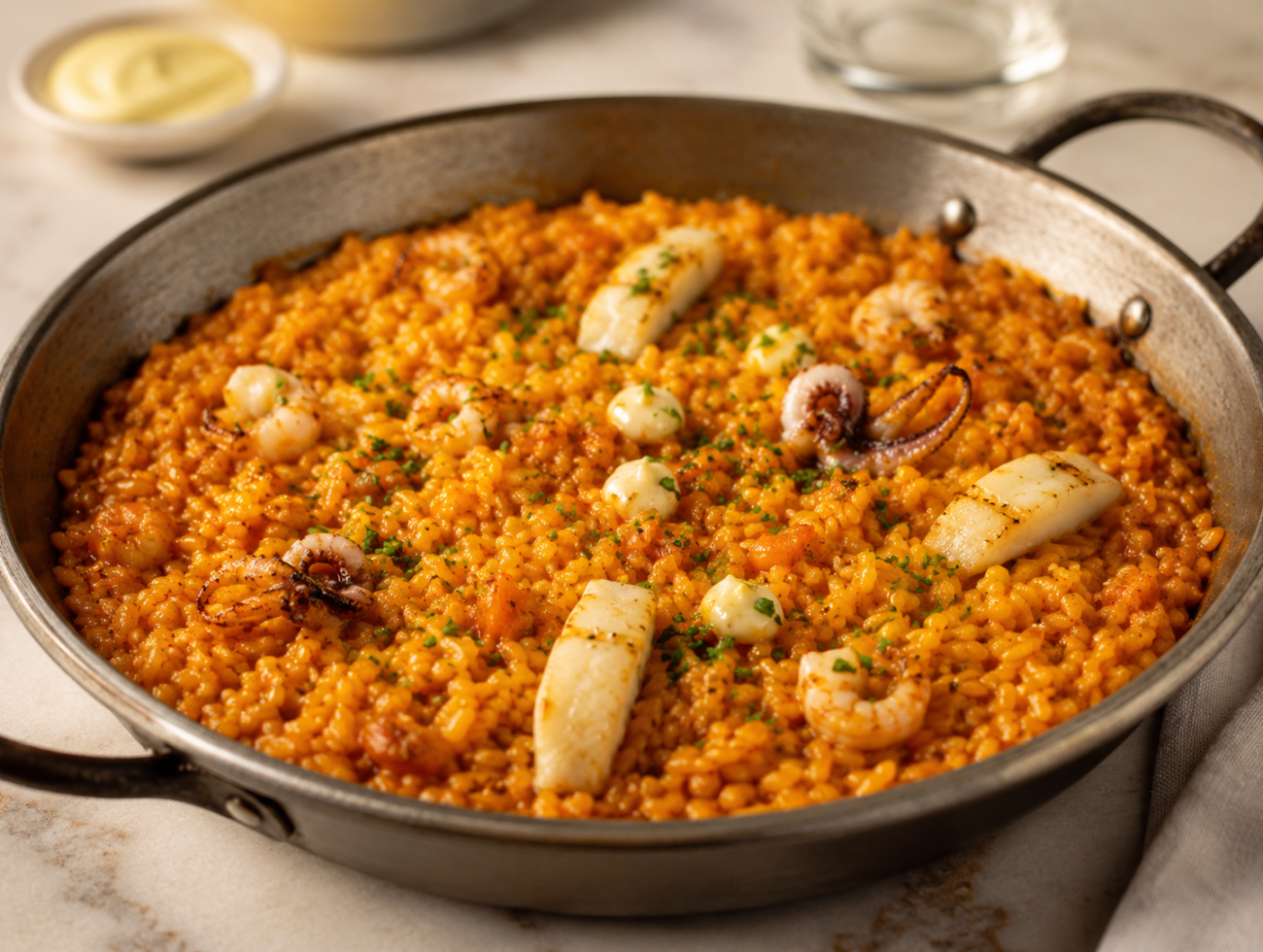
Arroz a banda is a traditional rice dish from Spain's Alicante and Valencian coast, where fishermen originally cooked rice in the deeply flavored broth left from preparing their catch.
This version builds that maritime flavor with cuttlefish, shell-on shrimp, tomato, paprika, saffron, and bomba rice cooked until dry, tender, and separate.
Why You’ll Love This Recipe
- Crushing the shrimp shells into the stock gives the rice a more concentrated seafood flavor.
- Bomba rice absorbs the savory broth while retaining a pleasantly distinct texture.
- Cuttlefish and shrimp provide two complementary seafood flavors without making the ingredient list overly complicated.
- The entire rice dish is cooked in one wide pan and served directly from it.
- Its festive appearance makes it well suited to relaxed weekend lunches and shared family meals.
Ingredient Notes
Bomba rice
This short-grain Spanish rice absorbs a large amount of broth while holding its shape. Avoid rinsing it because the surface starch contributes to the characteristic texture.
Cuttlefish
Cuttlefish has firm, mildly sweet flesh and contributes savory depth to the rice. Ask the seafood seller to clean it, or use cleaned squid as a more accessible US alternative.
Shell-on shrimp
The shells and heads contain a great deal of flavor. Browning them first and blending them with stock creates a richer base than peeled shrimp alone.
Fish stock
Use a mild but flavorful stock made from white fish bones, heads, and trimmings. An excessively strong or oily stock can overpower the rice.
Saffron and paprika
Saffron contributes aroma and golden color, while sweet Spanish paprika adds warmth and depth. Add the paprika immediately before the liquid so it does not scorch.
Expert Tips
- Use a wide, shallow pan so the rice cooks in a thin, even layer and moisture evaporates efficiently.
- Keep the stock simmering before adding it because cold liquid interrupts cooking and can produce unevenly cooked grains.
- After distributing the rice, avoid stirring it so the grains remain separate and the bottom can develop a lightly toasted layer.
- Strain the blended shrimp-shell mixture through a fine-mesh strainer and press gently without forcing sharp shell fragments through it.
- Keep a small saucepan of extra boiling stock nearby because rice varieties and pan dimensions can change the amount of liquid required.
- Let the finished rice rest for 5 minutes so the remaining moisture redistributes and the grains settle before serving.
Serving Suggestions
Serve arroz a banda directly from the pan with lemon wedges and a small amount of garlic aioli offered separately; traditional egg-based aioli changes the recipe's egg-free category and adds extra calories.
Pair it with a simple tomato salad, roasted peppers, marinated olives, or another light Spanish appetizer so the seafood rice remains the centerpiece.
Storage and Reheating
Transfer leftovers to shallow airtight containers and refrigerate them within 2 hours. Store for up to 3 days. Reheat only the portion needed in a covered skillet with a small splash of fish stock or water, or microwave it covered, until it reaches 165°F (74°C). Avoid repeated reheating. The rice can be frozen for up to 2 months, although the shrimp and cuttlefish may become slightly firmer after thawing.
Frequently Asked Questions
What is the difference between arroz a banda and paella?
Arroz a banda is traditionally cooked in concentrated fish broth and served separately from the fish used to prepare that broth, while paella refers to a broader family of rice dishes with many different combinations of meat, seafood, and vegetables.
Can I substitute another rice for bomba rice?
Yes. Calasparra or another Spanish short-grain rice works well, but the amount of stock and cooking time may need adjustment. Arborio can be used in an emergency, although its creamier texture is less traditional.
Can I make arroz a banda without cuttlefish?
Yes. Cleaned squid is the closest practical substitute in the United States. Cut it into bite-size pieces and watch it carefully because small squid pieces may become tender sooner.
Why should the rice not be stirred after adding the stock?
Leaving the rice undisturbed helps the grains cook separately instead of releasing excess starch, and it allows a lightly toasted layer to form on the bottom of the pan.
CuisineSpanish (Valencian and Alicante) CourseMain Course Yield4 servings NutritionApprox. 470 calories per serving
Ingredients
- 9 ounces (260 g) bomba rice
- 3 1/4 cups (750 ml) hot fish stock or seafood fumet, plus a little extra if needed
- 1 medium cleaned cuttlefish, about 1 pound (450 g), cut into bite-size pieces
- 8 large shell-on shrimp
- 3 tablespoons (45 ml) extra-virgin olive oil
- 1 medium yellow onion, finely chopped
- 2 ripe tomatoes, about 10 ounces (285 g), grated with the skins discarded
- 1 garlic clove, peeled and finely chopped
- 1 teaspoon sweet Spanish paprika (pimentón dulce)
- 1/4 teaspoon loosely packed saffron threads
- 1 teaspoon kosher salt, plus more to taste
Instructions
- Keep the fish stock hot in a saucepan over low heat while you prepare the rice.
- Heat the olive oil in a 14-inch paella pan or wide shallow skillet over medium-high heat.
- Add the shell-on shrimp and cook for about 1 minute per side, just until lightly browned. Transfer them to a plate and let them cool enough to handle.
- Reduce the heat to medium, add the chopped onion to the same pan, and cook for 6 to 8 minutes, stirring frequently, until softened and lightly golden.
- Add the grated tomatoes, cuttlefish, and chopped garlic. Cook for 8 to 10 minutes, stirring occasionally, until the tomato has reduced and the cuttlefish is lightly sautéed.
- Peel the shrimp, reserving the meat. Place the shells and heads in a blender with about 1/2 cup of the hot stock, carefully pulse until crushed, and strain the liquid through a fine-mesh strainer back into the remaining stock.
- Stir the bomba rice into the tomato and cuttlefish mixture and cook for 1 minute so the grains are evenly coated.
- Sprinkle in the paprika, saffron, and salt, stir briefly, and immediately pour in the hot fortified fish stock.
- Distribute the rice evenly across the pan, bring the liquid to a steady simmer, and cook without stirring for about 19 minutes, adjusting the heat as needed.
- Add the peeled shrimp during the final 3 to 4 minutes of cooking. If the rice becomes dry before it is tender, add a small amount of additional boiling stock around the edges of the pan.
- Remove the pan from the heat when the rice is tender, dry, and separate. Let it rest for 5 minutes before serving.
Notes
The calorie estimate assumes a 1-pound cleaned cuttlefish, approximately 4 ounces of edible shrimp, all the rice and vegetables, and about 2 1/2 tablespoons of the 3 tablespoons of olive oil remain in and are consumed with the finished dish. The estimated recipe total is about 1,880 calories divided among four servings.
Bomba rice is available from Spanish markets and many online retailers in the United States. Calasparra rice is an excellent substitute, while another short-grain Spanish rice may be used with adjustments to the stock and cooking time.
Cuttlefish may require a Spanish, Mediterranean, Asian, or specialty seafood market in the United States. Cleaned squid is the most practical substitute, although it has a milder flavor and may cook more quickly.
Use homemade fish stock when possible. If using packaged stock, check the label for wheat, dairy, soy, sesame, or other added allergens before relying on the corresponding dietary categories.
The shrimp shells and heads intensify the stock, but they should be strained very thoroughly so no hard fragments reach the finished rice.

 Main Dishes