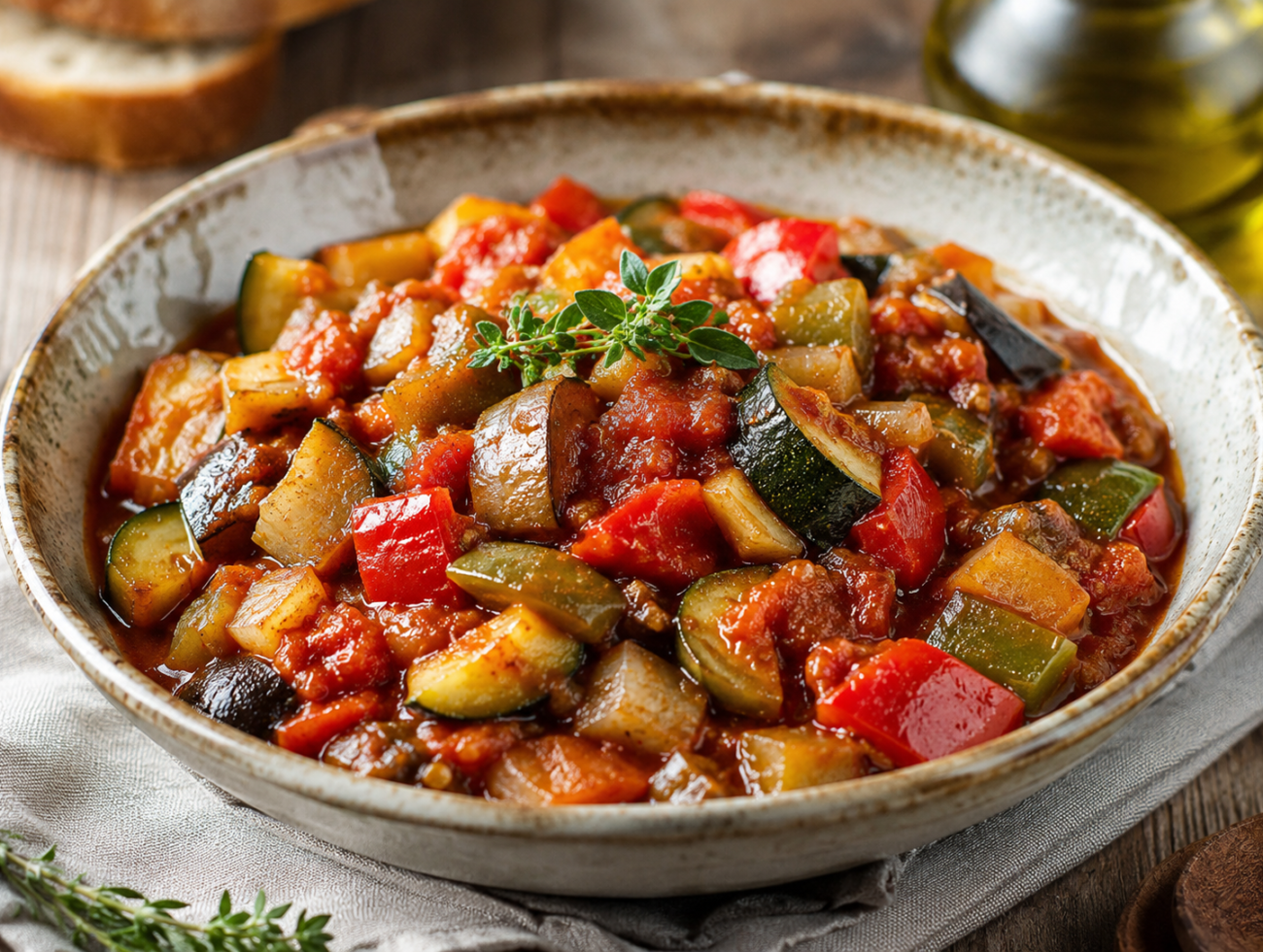
Pisto manchego is a rustic vegetable stew from Castile-La Mancha in which tomatoes, peppers, zucchini, onion, and garlic are slowly cooked in extra-virgin olive oil.
The long simmer transforms a short list of familiar vegetables into a rich, tender dish that can be served as a main course, a tapa, or a versatile accompaniment.
Why You’ll Love This Recipe
- Slow cooking concentrates the natural sweetness of the tomatoes, peppers, onion, and zucchini.
- The recipe uses inexpensive, widely available vegetables and requires no specialty equipment.
- It is naturally vegan and free from gluten, dairy, eggs, nuts, soy, sesame, fish, and shellfish.
- Pisto tastes excellent hot, warm, or at room temperature and can be prepared ahead.
- The finished dish works equally well as a vegetable main course, a tapa, or a side for other Spanish dishes.
Ingredient Notes
Ripe tomatoes
Choose deeply colored tomatoes that feel heavy and smell fragrant near the stem. Roma or plum tomatoes are especially useful because they contain plenty of flesh and less excess liquid.
Green and red peppers
The combination gives the pisto both fresh vegetal flavor and gentle sweetness. Bell peppers are convenient in the United States, while Italian frying peppers create a softer texture.
Zucchini
Use a firm zucchini with smooth skin and no soft spots. There is no need to peel it unless the skin is unusually thick or damaged.
Onion and garlic
These vegetables form the aromatic base of the dish. Cook them slowly without deep browning so their sweetness blends into the tomato rather than dominating it.
Extra-virgin olive oil
The olive oil carries the flavor of the vegetables and remains in the finished stew. Choose a fruity oil without excessive bitterness.
Expert Tips
- Keep the chopped vegetables separate so each one can be added at the correct stage of cooking.
- Use a wide, heavy pot that encourages evaporation and distributes heat evenly across the vegetables.
- Cook the onion and garlic over low heat so they soften completely without becoming dark or bitter.
- Stir the covered pisto periodically, especially near the end of cooking, to prevent the concentrated tomato from sticking.
- Remove the lid for the final stage so excess moisture evaporates and the vegetables become cohesive without drying out.
- Let the finished pisto rest for 10 to 15 minutes before serving if time allows, since the flavors become more balanced as it cools slightly.
Serving Suggestions
Serve the pisto with a fried or poached egg and crusty bread for a traditional Spanish meal; use gluten-free bread when needed.
It also makes an excellent accompaniment for grilled meat, roasted chicken, fish, sausages, rice, or roasted potatoes.
Storage and Reheating
Transfer leftover pisto to a shallow airtight container and refrigerate it within 2 hours for up to 3 to 4 days. Reheat it gently in a saucepan over medium-low heat, stirring occasionally, until steaming hot or it reaches 165°F (74°C). It can also be served cold or at room temperature after safe refrigeration. Freeze individual portions for up to 3 months, although the zucchini and peppers may become softer after thawing.
Frequently Asked Questions
Is pisto manchego the same as ratatouille?
They are similar vegetable dishes, but pisto manchego is Spanish and usually emphasizes tomatoes, peppers, zucchini, onion, garlic, and olive oil cooked into a cohesive stew.
Do I need to peel the tomatoes?
Peeling produces a smoother pisto without curled pieces of tomato skin. Blanching the tomatoes for a few seconds makes the skins easy to remove.
Can pisto manchego be made ahead?
Yes. Its flavor often improves after several hours or overnight in the refrigerator. Reheat it gently or serve it at room temperature.
Can I add eggs to the pisto?
Yes. Fried eggs are a traditional accompaniment, and beaten eggs can also be stirred into hot pisto, but either option means the complete dish is no longer vegan or egg-free.
CuisineSpanish (Castile-La Mancha) CourseMain Course, Tapas, Side Dish Yield4 servings NutritionApprox. 245 calories per serving
Ingredients
- 4 medium ripe tomatoes, about 1 1/2 pounds (680 g)
- 2 garlic cloves, peeled and finely chopped
- 1 large yellow onion, about 9 ounces (250 g), finely chopped
- 1 large green bell pepper, about 7 ounces (200 g), stemmed, seeded, and diced
- 1 large red bell pepper, about 7 ounces (200 g), stemmed, seeded, and diced
- 1 medium zucchini, about 10 1/2 ounces (300 g), trimmed and diced
- 5 tablespoons (75 ml) extra-virgin olive oil
- 1 teaspoon kosher salt, plus more to taste
- 1/4 teaspoon freshly ground black pepper, plus more to taste
Instructions
- Bring a large saucepan of water to a boil and prepare a bowl of ice water. Remove the hard cores from the tomatoes and cut a shallow X in the bottom of each one.
- Lower the tomatoes into the boiling water for 15 to 20 seconds, transfer them immediately to the ice water, and then peel off and discard the skins.
- Roughly chop the peeled tomatoes, transfer them to a blender or food processor, and pulse until crushed but not completely smooth.
- Cut the onion, green pepper, red pepper, and zucchini into small, evenly sized pieces, keeping each vegetable separate because they will be added at different times.
- Heat the olive oil in a wide Dutch oven or heavy saucepan over low heat. Add the garlic and onion and cook for 15 minutes, stirring occasionally, until very soft without allowing them to brown.
- Add the green and red peppers and continue cooking gently for another 15 minutes, stirring from time to time.
- Stir in the zucchini and crushed tomatoes, season with the salt and black pepper, and bring the mixture to a gentle simmer.
- Cover the pot and cook over very low heat for about 90 minutes, stirring occasionally, until all the vegetables are exceptionally tender and their flavors have blended.
- Remove the lid, increase the heat to medium-low, and cook for about 15 minutes more, stirring frequently, until the excess tomato liquid evaporates and the pisto is juicy but not watery.
- Taste and adjust the seasoning, then serve hot, warm, or at room temperature.
Notes
The calorie estimate assumes all 5 tablespoons of olive oil remain in and are consumed with the finished pisto; the estimated total is about 980 calories divided among four servings.
Standard green and red bell peppers are widely available US options and give the pisto a mild flavor. Italian frying peppers may be used for a softer, slightly sweeter result.
Cutting the vegetables into similarly sized pieces helps them cook evenly, but keep them separate until each is added to the pot.
Pisto contains no eggs as written. Fried eggs are a traditional optional accompaniment but would change the dietary categories and calorie count.
The long, gentle cooking time concentrates the vegetables without scorching the tomato or browning the onion too deeply.

 Main Dishes