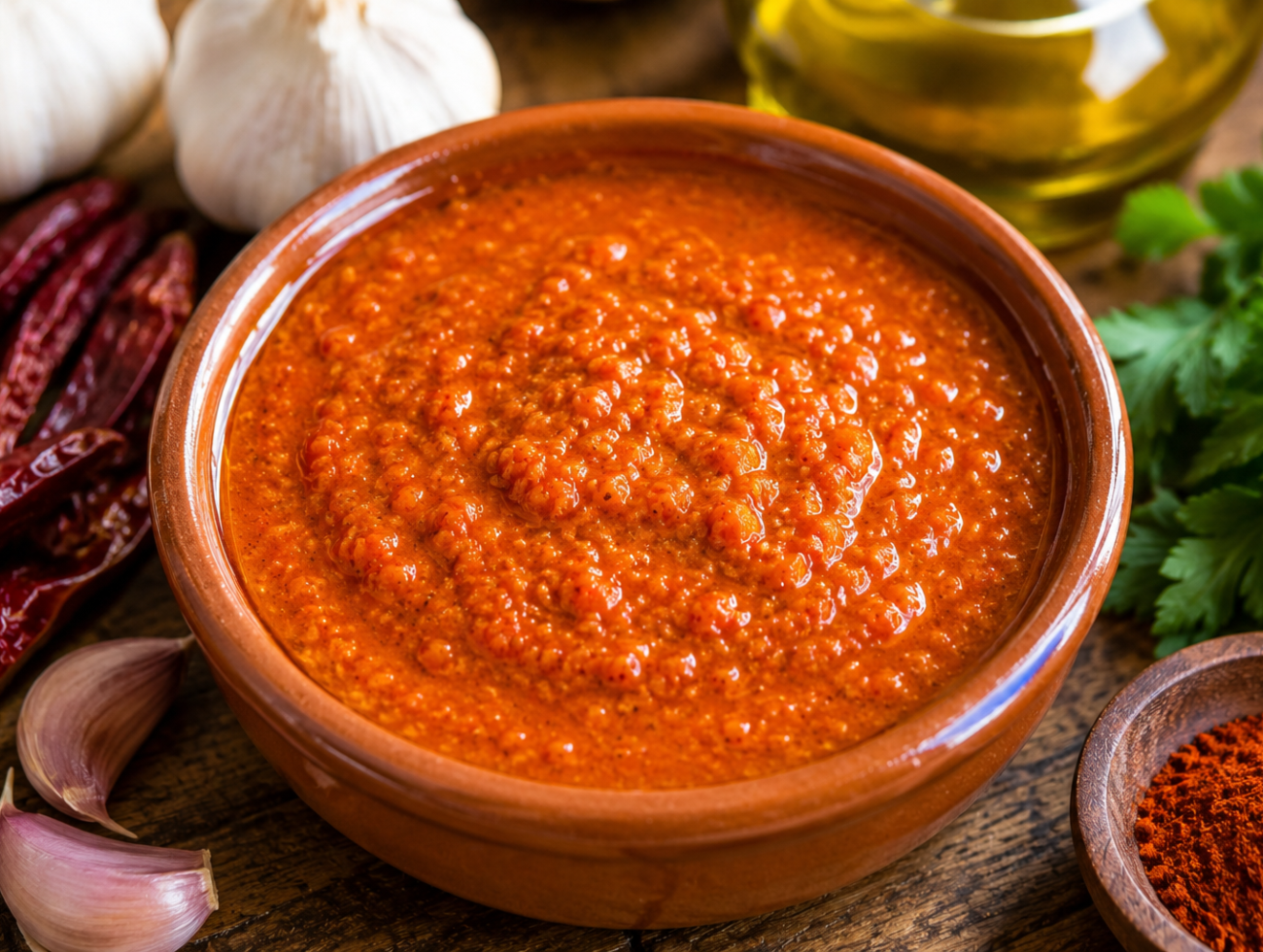
Mojo picón, also known as mojo rojo, is a vibrant Canarian sauce that combines red peppers, garlic, cumin, vinegar, and olive oil with a noticeable but adjustable level of heat.
It is traditionally served with wrinkled salt-crusted potatoes, although its smoky, garlicky flavor also complements grilled vegetables, seafood, and meat.
Why You’ll Love This Recipe
- It delivers bold pepper, garlic, cumin, and vinegar flavors without requiring any cooking.
- Slowly streaming in the olive oil gives the sauce a smooth, lightly creamy consistency.
- The amount of cayenne can be adjusted easily for a mild, medium, or fiery sauce.
- It pairs with potatoes, vegetables, fish, seafood, chicken, pork, and grilled beef.
- The sauce can be prepared ahead and kept refrigerated for convenient meals throughout the week.
Ingredient Notes
Choricero peppers
These dried Spanish peppers provide sweet, concentrated pepper flavor with relatively little heat. Soak them until soft and use only the scraped flesh, since the skins remain tough.
Roasted red peppers
Drained jarred roasted red peppers add color, moisture, and sweetness. Choose plain peppers without herbs, sugar, or heavy seasoning.
Dried cayenne chiles
Cayenne supplies the characteristic heat when Canarian pimienta picona is unavailable. Use one chile for a gentler sauce or two for a noticeably spicy result.
Ground cumin
Cumin is a defining flavor in red Canarian mojo. Use fresh, aromatic ground cumin and measure it carefully so it does not overpower the peppers.
Extra-virgin olive oil
The olive oil forms most of the sauce and remains uncooked, so choose a smooth, fruity oil with moderate bitterness.
Expert Tips
- Soak the choricero peppers until completely tender so their flesh separates easily from the skins.
- Scrape only the softened red flesh from the dried peppers because pieces of skin can make the finished mojo coarse.
- Blend the pepper and garlic mixture thoroughly before adding the oil to create the smoothest possible base.
- Pour in the olive oil gradually while blending so the sauce emulsifies instead of becoming visibly separated.
- Add the cayenne conservatively at first because the sauce becomes more intense after it rests.
- Let the finished mojo chill for at least 30 minutes before serving so the garlic, cumin, vinegar, and pepper flavors can blend.
Serving Suggestions
Serve mojo picón with papas arrugadas, roasted potatoes, french fries, grilled vegetables, or crusty bread for dipping.
Spoon it over grilled steak, pork, chicken, white fish, shrimp, or roasted cauliflower, or use a small amount as a flavorful sandwich spread.
Storage and Reheating
Transfer the mojo picón to a clean airtight container and refrigerate it immediately for up to 5 days. Stir or shake it well before serving because slight separation is normal. Serve it cold or allow the portion being used to stand briefly at room temperature. Do not heat the sauce directly, since excessive heat can dull the fresh garlic and pepper flavors. Freezing is not recommended because the emulsion may separate after thawing.
Frequently Asked Questions
What is the difference between mojo picón and mojo verde?
Mojo picón is a red sauce made with peppers, paprika, garlic, cumin, vinegar, and olive oil, while mojo verde is usually made with cilantro or parsley and has a fresher herbal flavor.
What can I use instead of Canarian pimienta picona?
Small dried cayenne chiles or chile de árbol are practical US substitutes. Begin with a small amount and add more after tasting.
Can I use jarred choricero pepper pulp?
Yes. Replace the two dried choricero peppers with approximately 2 tablespoons of prepared choricero pepper pulp and skip the soaking step.
How can I make mojo picón less spicy?
Use only one cayenne chile, remove its seeds, or omit it entirely. The roasted red pepper and choricero peppers will still give the sauce plenty of flavor and color.
CuisineSpanish (Canarian) CourseSauce, Condiment Yield12 servings NutritionApprox. 110 calories per serving
Ingredients
- 2 dried choricero peppers
- 2 ounces (90 g) drained jarred roasted red peppers
- 2 small dried cayenne chiles, or to taste
- 2 garlic cloves, peeled
- 1 teaspoon sweet Spanish paprika (pimentón dulce)
- 2 teaspoons (5 g) ground cumin
- 1 tablespoon (15 ml) red wine vinegar or sherry vinegar
- 1 tablespoon plus 2 teaspoons (25 ml) water
- 1/2 teaspoon kosher salt, plus more to taste
- 2/3 cup (150 ml) extra-virgin olive oil
Instructions
- Remove the stems and most of the seeds from the dried choricero peppers, place them in a heatproof bowl, and cover them with warm water.
- Let the peppers soak for 30 minutes, or until their flesh is completely soft.
- Drain the softened peppers and scrape the red flesh away from the tough skins with the edge of a spoon. Discard the skins.
- Place the choricero pepper flesh, roasted red peppers, cayenne chiles, garlic, paprika, cumin, vinegar, water, and salt in a blender or tall immersion-blender container.
- Blend until the ingredients form a completely smooth red paste, scraping down the sides as necessary.
- With the blender running, slowly pour in the olive oil in a thin, steady stream until the sauce becomes smooth, glossy, and lightly emulsified.
- Taste and adjust the salt, vinegar, or cayenne, then transfer the mojo picón to a clean container and refrigerate until ready to serve.
Notes
The calorie estimate includes all 150 ml of olive oil and the remaining sauce ingredients. The estimated recipe total is approximately 1,320 calories divided into 12 servings of about 2 tablespoons each.
Traditional Canarian pimienta picona or dried Palmero peppers can be difficult to find in the United States. Small dried cayenne chiles provide accessible heat, while chile de árbol may also be used.
Dried choricero peppers are available from Spanish specialty stores and online retailers. Approximately 2 tablespoons of jarred choricero pepper pulp may be substituted for the two dried peppers.
Jarred roasted red peppers are a practical US option for Spanish pimientos morrones. Drain them thoroughly before weighing so the sauce does not become watery.
The preparation time does not include the 30-minute soaking period for the dried choricero peppers.
The level of heat varies considerably among dried chiles, so begin with one cayenne for a milder sauce and add the second after tasting.

 Main Dishes