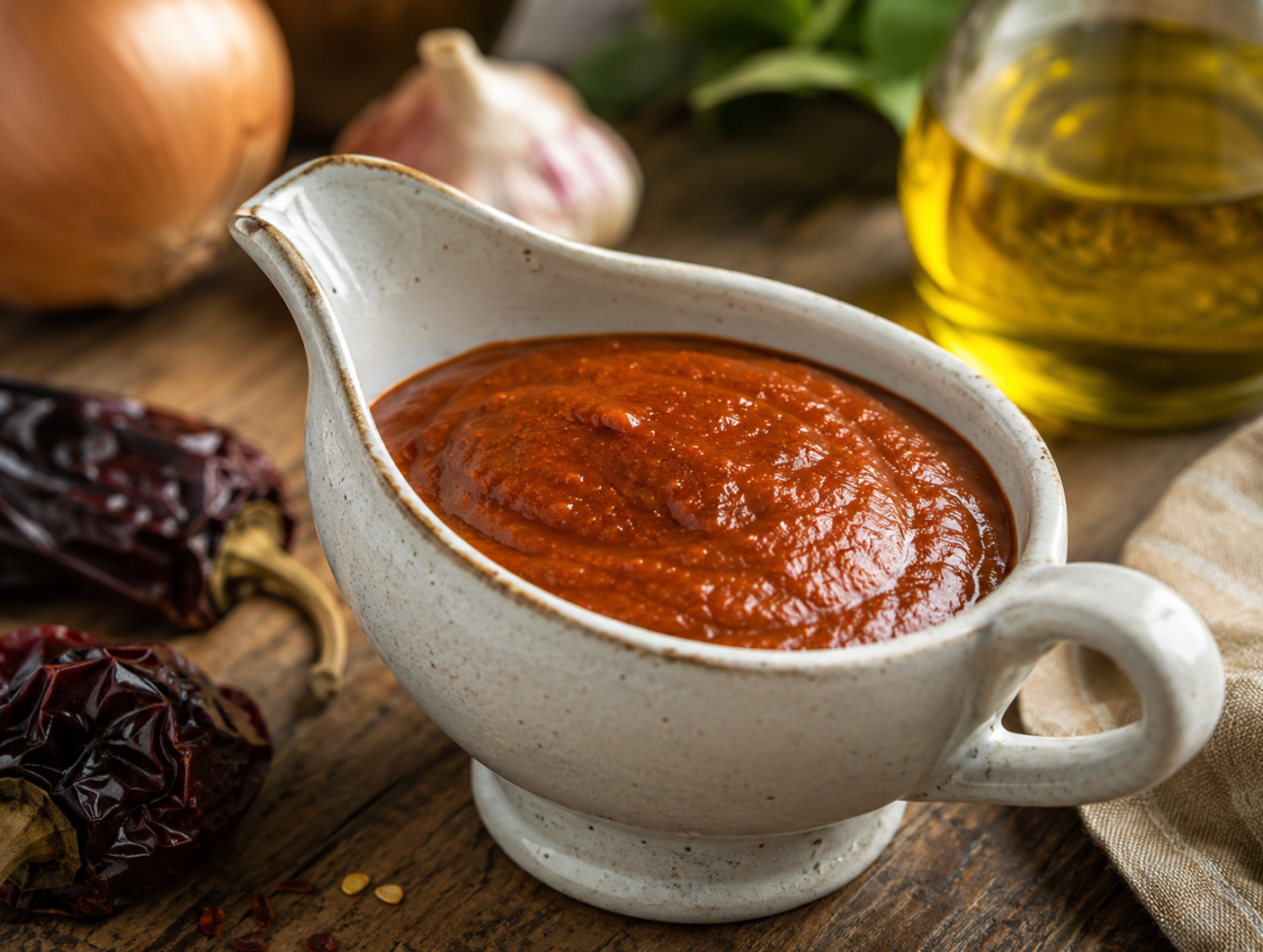
Salsa vizcaína is a classic Basque sauce built from slowly softened onions and the sweet, earthy flesh of dried choricero peppers.
This version gains additional savory depth from a small piece of cured ham and a splash of brandy before being blended into a smooth red sauce.
Why You’ll Love This Recipe
- Slow-cooked onions give the sauce natural sweetness without requiring added sugar.
- Choricero peppers provide a deep red color and gentle pepper flavor without intense heat.
- A small amount of ham adds savory depth while allowing the onions and peppers to remain prominent.
- The finished sauce pairs well with fish, seafood, meat, potatoes, and savory fillings.
- It can be prepared ahead and reheated gently whenever a flavorful Spanish sauce is needed.
Ingredient Notes
Choricero peppers
These dried Spanish red peppers have sweet, concentrated flesh and mild heat. Soaking softens them so the flesh can be scraped away from the tough skins.
Onions
Onions form most of the body of the sauce. Cook them slowly until completely tender and lightly golden rather than deeply browned or crisp.
Ham end or bone
A small piece of Serrano ham or a meaty cured ham bone contributes salt and savory pork flavor. Remove it before blending the sauce.
Brandy
Brandy adds warmth and complexity. Let it cook briefly before adding water so the harsh raw alcohol aroma evaporates.
Extra-virgin olive oil
The olive oil gently cooks the onions and carries the flavor of the peppers. Choose a fruity Spanish-style oil with moderate bitterness.
Expert Tips
- Blanch the dried peppers several times before soaking them to reduce any bitter flavor from the skins.
- Keep the onions over low heat and stir regularly so they soften and sweeten without scorching.
- Scrape only the soft red flesh from the peppers and discard the tough skins, which can make the sauce coarse.
- Add salt only after removing the ham and blending the sauce because cured ham can release considerable seasoning.
- Strain the blended sauce when serving it with delicate fish or when you want a particularly smooth restaurant-style finish.
- If the sauce becomes too thick, loosen it gradually with warm soaking liquid, water, fish stock, or meat stock suited to the dish being served.
Serving Suggestions
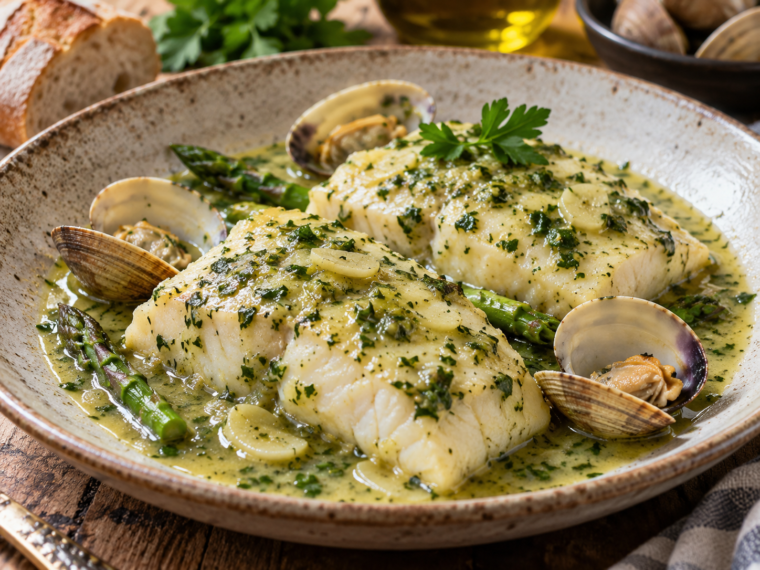
Spoon the warm sauce over baked, poached, or pan-seared cod for the classic preparation known as bacalao a la vizcaína.
Use it with pork, roasted potatoes, meatballs, snails, hamburgers, or as a flavorful filling component for empanadas and savory hand pies.
Storage and Reheating
Cool the sauce promptly and refrigerate it in an airtight container for up to 4 days. Reheat it gently in a saucepan over low heat, stirring frequently and adding a splash of water or stock if it has thickened. Freeze the cooled sauce in small airtight portions for up to 3 months, then thaw it overnight in the refrigerator and blend briefly after reheating if the texture has separated.
Frequently Asked Questions
Does traditional salsa vizcaína contain tomatoes?
Some historical and regional versions include tomato, but many modern Basque preparations rely entirely on onions and choricero peppers for their color, sweetness, and body.
What can I use instead of dried choricero peppers?
Jarred choricero pepper pulp is the easiest direct substitute. Dried ñora peppers are also suitable, while ancho chiles can work in the United States but create a less traditional flavor.
Why is my Biscay sauce bitter?
The peppers may not have been blanched, some scorched paprika or garlic may be present, or the onions may have burned. Use gentle heat and scrape only the softened pepper flesh from the skins.
Can salsa vizcaína be made ahead?
Yes. Prepare it up to four days in advance and refrigerate it, or freeze it for longer storage. Reheat it slowly and adjust the consistency with a little water or stock.
CuisineSpanish (Basque) CourseSauce, Condiment Yield6 servings NutritionApprox. 110 calories per serving
Ingredients
- 4 dried choricero peppers
- 3 medium yellow, white, or red onions, about 1 1/2 pounds (680 g), thinly sliced
- 1 garlic clove, peeled and finely chopped, optional
- 3 tablespoons (45 ml) extra-virgin olive oil
- 1 small piece Serrano ham end or meaty ham bone, about 2 ounces (55 g)
- 2 tablespoons (30 ml) brandy or Cognac
- 1 1/2 cups (355 ml) reserved choricero soaking water or plain water, plus more as needed
- 1/4 teaspoon kosher salt, only if needed
- 1/8 teaspoon freshly ground black pepper, optional
Instructions
- Remove the stems and most of the seeds from the dried choricero peppers.
- Bring a saucepan of water to a boil, add the peppers, and blanch them for about 30 seconds. Drain and repeat the blanching process two more times with fresh water to reduce possible bitterness.
- Cover the blanched peppers with hot water and let them soak for at least 2 hours, or until completely soft.
- Heat the olive oil in a wide heavy saucepan over low heat. Add the sliced onions and cook for about 20 minutes, stirring frequently, until very soft and lightly golden without becoming crisp.
- Add the optional garlic and cook for 1 minute, stirring constantly, until fragrant.
- Drain the softened choricero peppers, reserving their soaking liquid, and scrape the red flesh from the skins with the back of a knife. Discard the skins.
- Add the choricero pepper flesh to the onions and stir until evenly distributed.
- Pour in the brandy and cook for 1 to 2 minutes, stirring, until its sharp alcoholic aroma has mostly evaporated.
- Add the ham piece and 1 cup of the reserved soaking water. Bring the mixture to a gentle simmer.
- Cook uncovered over low heat for about 30 minutes, stirring occasionally and adding small amounts of the remaining liquid if the sauce becomes too dry.
- Remove and discard the ham piece, then blend the sauce until completely smooth.
- For an especially refined texture, press the blended sauce through a fine-mesh strainer.
- Adjust the consistency with additional warm water if needed, taste before adding salt, and serve warm.
Notes
The calorie estimate includes all three onions, the choricero pepper flesh, the brandy, approximately 2 1/2 tablespoons of the olive oil remaining in the sauce, and a modest amount of fat and flavor released by the ham. The estimated total is about 660 calories divided among six servings.
Dried choricero peppers and jarred choricero pepper pulp are available from Spanish specialty stores and online retailers in the United States.
If using prepared choricero pepper pulp, replace the four dried peppers with approximately 4 tablespoons of pulp and use plain water instead of pepper-soaking liquid.
When choricero peppers are unavailable, rehydrated dried ñora peppers are the closest Spanish substitute. Dried ancho chiles can be used in the United States, but they produce a sweeter, earthier, and less traditional flavor.
The ham flavors the sauce and is removed before blending, so the finished recipe is not vegetarian or vegan.
Taste the sauce before adding salt because the ham may season it sufficiently.

 Main Dishes