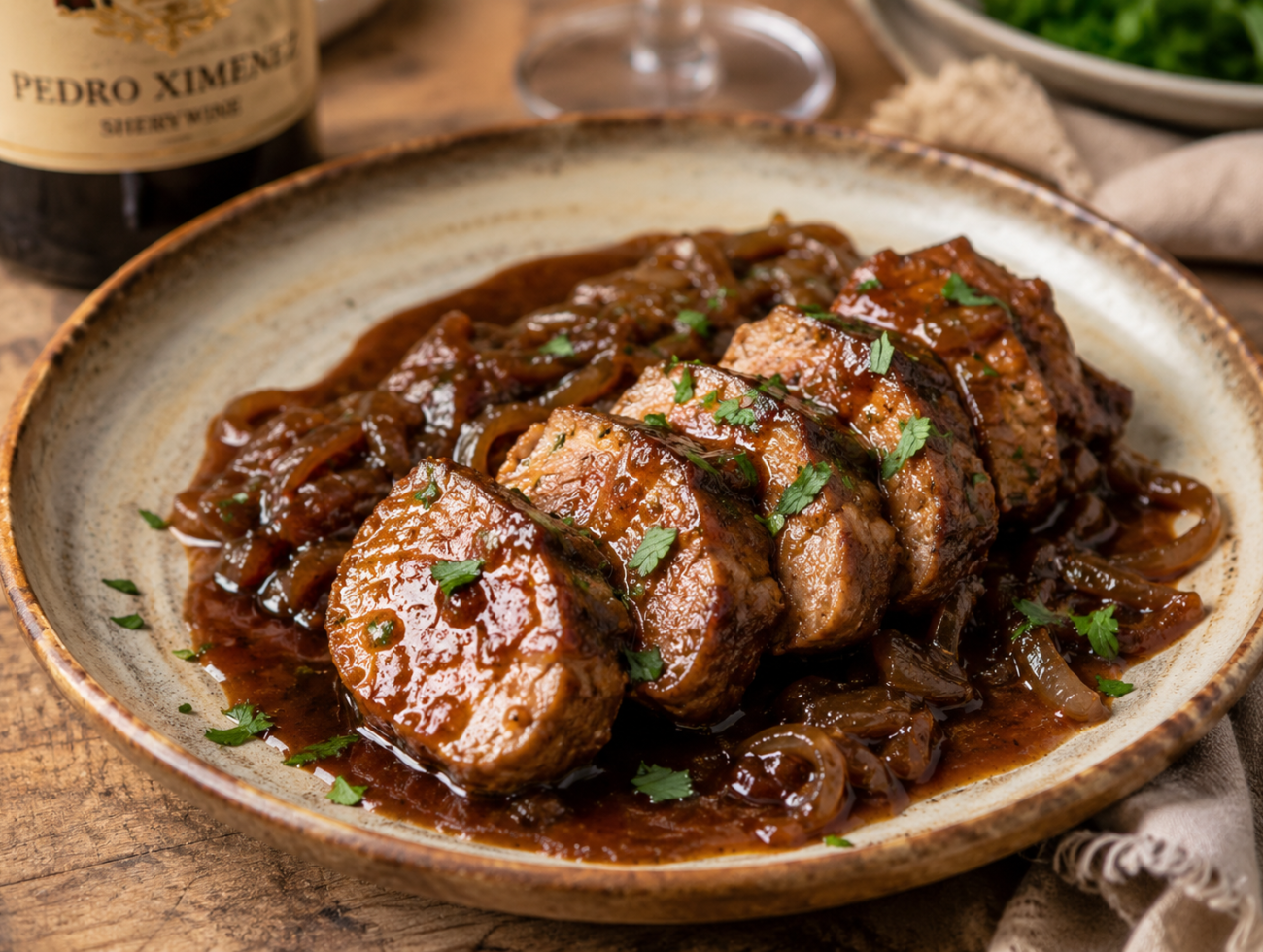
Pork tenderloin with Pedro Ximénez sauce is a rich Spanish main course that balances savory pork with the concentrated sweetness of one of Spain's most distinctive sherry wines. Slowly cooked onions, mushrooms, and wine-soaked raisins create a deeply flavored sauce that becomes almost jammy after a long, gentle reduction.
The tenderloin is cooked separately so it can develop a deeply browned exterior while remaining juicy inside, then sliced and served over the glossy onion mixture. Although the sauce requires patience, most of the cooking is unattended and the result is well suited to a weekend dinner or special occasion.
Why You’ll Love This Recipe
- Pedro Ximénez creates an intensely flavored sweet wine sauce that pairs especially well with savory pork.
- Slow-cooked onions become naturally caramelized and form the rich foundation of the sauce.
- Portobello or cremini mushrooms add earthy depth that balances the sweetness of the wine and raisins.
- Cooking the tenderloin separately makes it easier to achieve a deeply browned exterior without drying out the meat.
- The sauce can be prepared ahead, making this impressive Spanish main course easier to serve for guests.
Ingredient Notes
Iberian pork tenderloin
Iberian pork is prized for its rich flavor and natural marbling. Standard pork tenderloin is leaner but remains an excellent substitute when cooked carefully and not taken beyond the proper internal temperature.
Pedro Ximénez
Pedro Ximénez is an exceptionally sweet Spanish sherry with flavors reminiscent of raisins, dried figs, caramel, and molasses. Its intensity means a relatively small quantity can create a deeply flavored sauce.
Yellow onions
The onions are cooked much longer than in an ordinary sauté. Low heat gradually removes moisture and develops sweetness without requiring added sugar.
Portobello or cremini mushrooms
Brown mushrooms provide earthy flavor and release moisture that helps the onions cook slowly without scorching during the early stages.
Raisins
Currants or sultanas absorb the Pedro Ximénez before cooking, becoming plump and intensely flavored. Golden raisins are an easy US substitute for Spanish sultanas.
Balsamic glaze
This optional addition increases the sauce's sweet-and-sour character and makes it more glossy. Use only a small amount so the Pedro Ximénez remains the dominant flavor.
Green pepper
The gently cooked pepper is an optional garnish that provides a fresh savory contrast to the sweet onion sauce. Cubanelle or Italian frying pepper can replace a standard green bell pepper.
Expert Tips
- Use the widest skillet available for the onion mixture so moisture evaporates gradually and the vegetables caramelize evenly.
- Keep the onions over very low heat and stir only occasionally during the first hour, adding a splash of water if necessary to prevent scorching.
- Reserve every drop of the Pedro Ximénez used to soak the raisins because it carries additional fruit flavor into the sauce.
- If using flour, cook it briefly before adding the wine so the finished sauce does not taste raw or floury.
- Reduce the wine slowly rather than boiling it aggressively, which gives the onions more time to absorb its flavor.
- Pat the pork dry before searing to encourage a dark, flavorful crust.
- Use an instant-read thermometer in the thickest part of the tenderloin rather than judging doneness by color alone.
- Rest the pork before slicing so the internal juices redistribute and remain in the meat.
Serving Suggestions
Serve the sliced tenderloin directly over the Pedro Ximénez onions and mushrooms so the meat juices mingle with the sauce.
Pair the pork with roasted potatoes, mashed potatoes, or a smooth potato purée to balance the concentrated wine sauce.
Roasted carrots, green beans, asparagus, or sautéed spinach provide a lighter vegetable accompaniment.
For a special Spanish-style meal, serve the pork with a dry red wine or an oloroso sherry to contrast with the sweetness of the sauce.
Storage and Reheating
Refrigerate the pork and sauce in separate airtight containers within 2 hours and use them within 3 to 4 days. Reheat the Pedro Ximénez sauce gently in a saucepan over low heat, adding a tablespoon or two of water if it has become too thick. Warm sliced pork briefly in the sauce or in a covered skillet only until heated through to avoid drying it out. The sauce can be frozen for up to 2 months. Cooked pork can also be frozen, although its texture is best when freshly prepared.
Frequently Asked Questions
What can I use instead of Pedro Ximénez wine?
A sweet cream sherry is the easiest US substitute. For a less sweet sauce, use equal parts cream sherry and dry white wine.
Can I use regular pork tenderloin instead of Iberian pork?
Yes. Standard pork tenderloin works very well, although it is usually leaner than Iberian pork. Monitor its temperature carefully and remove it from the heat when it reaches 145°F.
Can I make the Pedro Ximénez sauce ahead?
Yes. Prepare the onion, mushroom, raisin, and wine sauce up to 2 days ahead, refrigerate it, and gently reheat it before cooking and slicing the pork.
Why does the onion cook for so long?
Very slow cooking allows its moisture to evaporate gradually while developing sweetness and a soft, almost jam-like texture without burning the onions.
CuisineSpanish, Mediterranean CourseMain Course Yield2 servings NutritionApprox. 830 calories per serving
Ingredients
- 1 Iberian pork tenderloin, about 1.1 pounds (500 g), trimmed
- 2 large yellow onions, finely diced
- 8 ounces (250 g) cremini or portobello mushrooms, cleaned and quartered
- 2 garlic cloves, thickly sliced
- 1/2 cup (120 ml) Pedro Ximénez sweet sherry
- 1/4 cup (30 g) currants or sultana raisins
- 1/2 bay leaf
- 1 teaspoon all-purpose flour, optional
- 1 tablespoon balsamic glaze, optional
- 1 green bell pepper or Italian green pepper, sliced, optional garnish
- 3 tablespoons extra-virgin olive oil, divided, plus more if needed
- 1/4 cup (60 ml) water, plus more if needed
- Fine sea salt, to taste
- Freshly ground black pepper, to taste
- Flaky sea salt, for serving
Instructions
- Place the raisins in a small bowl and pour the Pedro Ximénez over them. Let them soak for 3 to 4 hours. For an overnight soak, cover and refrigerate.
- Heat 1 tablespoon of the olive oil in a wide skillet over medium heat. Add the mushrooms and sauté until they release most of their moisture and begin to brown.
- Reduce the heat to low and add the diced onions, sliced garlic, and bay leaf to the mushrooms.
- Cook very gently for about 90 minutes, stirring occasionally, until the onions are exceptionally soft, deeply golden, and naturally sweet. Season with a little salt and black pepper about halfway through cooking.
- Add a splash of water whenever necessary if the onions begin sticking before they have softened completely.
- Drain the raisins, reserving all of the Pedro Ximénez. Add the raisins to the onion mixture and cook for 10 to 15 minutes.
- If using the flour, sprinkle it over the onions and mushrooms and cook for about 2 minutes while stirring.
- Pour in the reserved Pedro Ximénez and about 1/4 cup of water. Add the optional balsamic glaze if using.
- Simmer the sauce over very low heat for approximately 30 minutes, stirring frequently, until the liquid has reduced and the onions are glossy and richly flavored.
- If using the green pepper garnish, heat a small amount of olive oil in a separate skillet and cook the pepper slices gently until tender and lightly browned. Season with salt and set aside.
- Pat the pork tenderloin dry and rub it lightly with the remaining olive oil.
- Heat a heavy skillet over medium-high heat. Add the tenderloin and sear it thoroughly on all sides until deeply browned.
- Continue cooking, turning as necessary, until the thickest part of the pork reaches 145°F (63°C).
- Transfer the pork to a cutting board and let it rest for at least 3 minutes before slicing.
- Taste the Pedro Ximénez onion sauce and adjust the salt and black pepper. Add a splash of water if it has reduced too much.
- Spread the onion, mushroom, and raisin sauce over two plates. Slice the pork tenderloin into thick medallions and arrange them over the sauce.
- Finish the meat with flaky sea salt and garnish with the cooked green pepper, if using. Serve immediately.
Notes
Iberian pork tenderloin has a richer flavor and usually more intramuscular fat than standard pork. If it is difficult to find in the United States, a high-quality fresh pork tenderloin is the most practical supermarket substitute.
Pedro Ximénez, often abbreviated PX, is an intensely sweet Spanish sherry made from dried Pedro Ximénez grapes. It may require a specialty wine shop in the US. A sweet cream sherry is the easiest substitute, although its flavor will be less concentrated.
If the flavor of straight Pedro Ximénez is too intense, replace half of it with a dry white wine, following the option used in the original preparation.
The raisins can be soaked overnight, but keep them covered in the refrigerator when soaking for more than a few hours.
The optional all-purpose flour contains wheat, so this formulation is not classified as Gluten-Free or Wheat-Free.
The balsamic glaze is optional and adds extra sweetness, acidity, and body. Check packaged glaze labels for allergens or other ingredients if dietary restrictions apply.
The long, low-temperature cooking of the onion is intentional. It concentrates the natural sweetness without aggressively frying or burning the pieces.
For food safety, whole pork tenderloin should reach at least 145°F (63°C) internally and rest for at least 3 minutes before slicing.
The calorie estimate assumes a 500-gram Iberian pork tenderloin, approximately 500 grams of onions, 250 grams of mushrooms, 30 grams of raisins, 120 milliliters of Pedro Ximénez, optional flour and glaze, and about 2 tablespoons of olive oil remaining in the finished dish.
The dietary and intolerance categories describe the complete written formulation only and do not guarantee the absence of cross-contact.

 Main Dishes