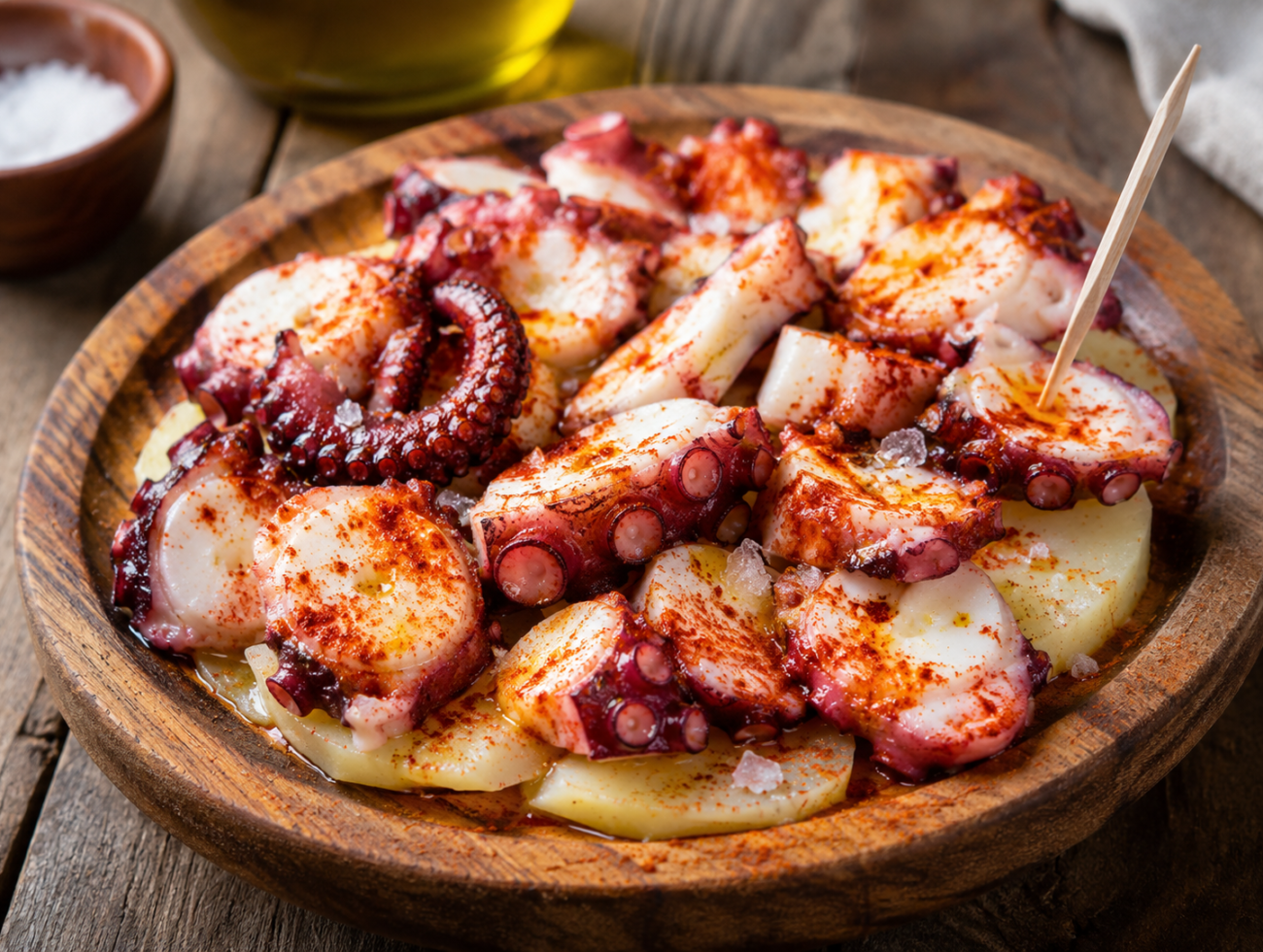
Pulpo a la gallega, also called pulpo a feira, pairs tender slices of octopus with soft potatoes, coarse salt, Spanish paprika, and a generous drizzle of extra-virgin olive oil.
The dish is served hot as a tapa, appetizer, or simple main course, with the smoky warmth of paprika balancing the mild sweetness of the octopus and potatoes.
Why You’ll Love This Recipe
- A short ingredient list keeps the flavor of the octopus at the center of the dish.
- Cooking the potatoes in the same pot lets them absorb some of the savory cooking liquid.
- Sweet and hot paprikas provide color, warmth, and adjustable heat.
- The recipe works as a shareable tapa or a satisfying seafood main course.
- Most of the preparation happens while the octopus and potatoes simmer together.
Ingredient Notes
Octopus
Choose a cleaned whole octopus with a fresh ocean aroma and firm flesh. Previously frozen octopus is a good choice because freezing helps weaken its muscle fibers.
Waxy potatoes
Yukon Gold or another waxy potato holds its shape well after simmering and provides a creamy texture beneath the octopus.
Spanish paprika
Using both pimentón dulce and pimentón picante gives the dish its characteristic balance of sweetness and heat without adding a separate sauce.
Extra-virgin olive oil
Use a flavorful olive oil suitable for finishing because it is added at the end and remains prominent in every bite.
Expert Tips
- Thaw frozen octopus slowly in the refrigerator and drain it well before cooking for more even tenderness.
- Dip the tentacles into boiling water three times before fully submerging the octopus to help them curl neatly and make the finished pieces easier to arrange.
- Use a skewer or thin knife to test the thickest part of a tentacle; it should enter with little resistance but the flesh should not feel mushy.
- Avoid boiling the octopus aggressively or cooking it far past tenderness, since excessive heat can make the exterior ragged and the flesh dry.
- Slice and season the octopus shortly before serving so the potatoes remain hot and the paprika stays fragrant.
Serving Suggestions
Serve the octopus on a wide platter or traditional wooden plate with toothpicks and crusty bread for guests who do not need a gluten-free meal.
For a larger Galician-inspired meal, pair it with a simple green salad, roasted peppers, or sautéed leafy greens.
Storage and Reheating
Refrigerate leftover octopus and potatoes in an airtight container within 2 hours and use them within 3 days. Reheat gently in a covered skillet with a teaspoon of water or briefly in the microwave just until hot, then refresh the dish with a little paprika and olive oil. Freezing the assembled dish is not recommended because the potatoes become grainy, although the cooked octopus can be frozen separately for up to 2 months.
Frequently Asked Questions
Why is the octopus dipped into the boiling water three times?
The repeated dipping helps the tentacles curl and allows the exterior to begin setting before the octopus is fully submerged.
How can I tell when the octopus is tender?
Insert a skewer or thin knife into the thickest part of a tentacle. It should slide in easily, similar to testing a cooked potato.
Can I make pulpo a la gallega with precooked octopus?
Yes. Cook the potatoes separately, slice the precooked octopus, and warm it only briefly before seasoning and serving to avoid a chewy texture.
Should pulpo a la gallega be served hot or cold?
It is best served hot, shortly after the octopus and potatoes are sliced and seasoned.
CuisineSpanish (Galician) CourseTapas, Main Course Yield4 servings NutritionApprox. 520 calories per serving
Ingredients
- 1 cleaned whole octopus, about 3.3 pounds (1.5 kg), fresh or fully thawed
- 1 tablespoon coarse sea salt for the cooking water, plus 1/2 teaspoon for finishing
- 3 medium waxy potatoes, about 1 1/2 pounds (680 g), peeled
- 1 tablespoon sweet Spanish paprika (pimentón dulce)
- 1 tablespoon hot Spanish paprika (pimentón picante)
- 3 tablespoons (45 ml) extra-virgin olive oil
Instructions
- Fill a large stockpot with enough water to submerge the octopus, add 1 tablespoon of the coarse sea salt, and bring the water to a strong boil over high heat.
- Holding the octopus by the head, lower the tentacles into the boiling water for about 2 seconds, lift them out for about 5 seconds, and repeat this dipping process two more times.
- Lower the octopus completely into the pot, reduce the heat to maintain a steady simmer, and cook for 25 to 30 minutes.
- Add the peeled potatoes during the final 15 to 20 minutes of cooking and simmer until the potatoes are tender and a skewer slides easily into the thickest part of an octopus tentacle.
- Transfer the octopus and potatoes to a tray and let them rest for about 5 minutes, then cut the potatoes into 1/2-inch slices and the tentacles into 1/2-inch pieces with kitchen shears.
- Arrange the potato slices on a serving platter, distribute the octopus over them, sprinkle with the remaining coarse sea salt and both paprikas, and drizzle evenly with the olive oil.
- Serve immediately while the octopus and potatoes are hot.
Notes
The calorie estimate assumes the cleaned octopus, all three potatoes, both paprikas, and all 3 tablespoons of olive oil are consumed; the estimated recipe total is about 2,080 calories divided among four servings.
Frozen octopus is often easier to find in US seafood markets, Latin markets, Asian markets, and some well-stocked supermarkets; thaw it completely in the refrigerator before cooking.
Fully cooked octopus option — use about 2 1/4 pounds (1 kg) cooked tentacles, boil the potatoes separately, and warm the sliced octopus gently before assembling so it does not become rubbery.
Pimentón picante can be replaced with additional sweet paprika for a mild version or with a mixture of sweet paprika and a small pinch of cayenne when Spanish hot paprika is unavailable.
Octopus is a mollusk, so this recipe is not suitable for people who need to avoid mollusks or shellfish.

 Main Dishes