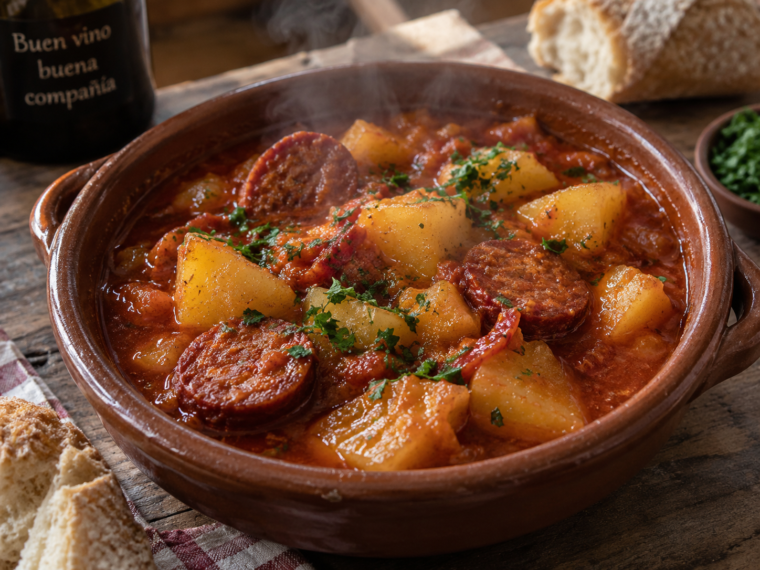
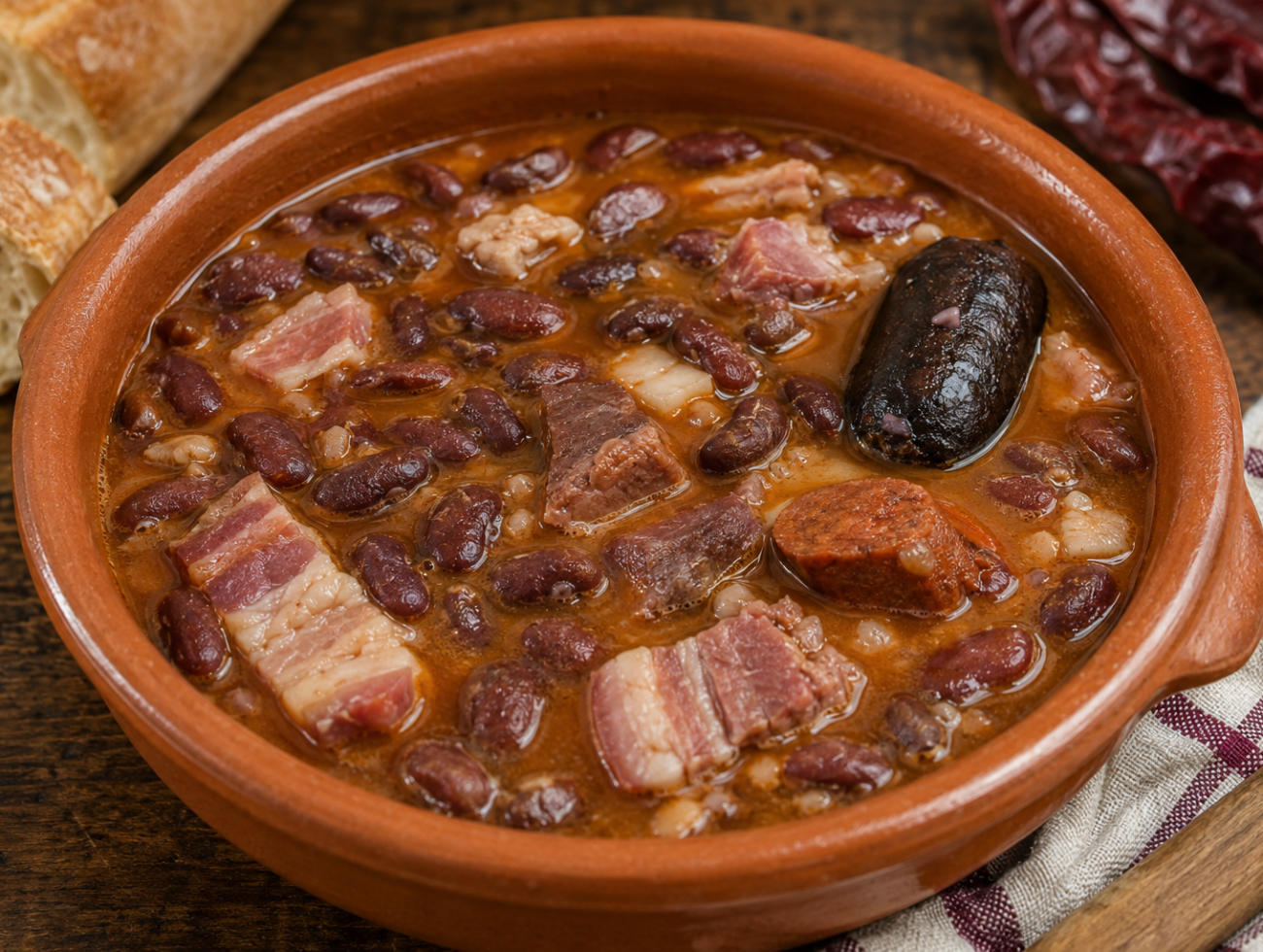
Olla podrida is a deeply savory bean stew associated with Burgos, where red beans simmer slowly with an abundant selection of marinated pork cuts, chorizo, and morcilla de Burgos.
A paprika, garlic, parsley, egg, and breadcrumb filling is cooked separately, cut into pieces, and added near the end to absorb the broth and give the finished stew additional body.
Why You’ll Love This Recipe
- The red beans absorb layers of flavor from several traditional pork cuts and sausages.
- Slow simmering transforms economical, collagen-rich cuts into tender meat and a full-bodied broth.
- Adding the morcilla near the end preserves its shape and distinctive rice-studded texture.
- The savory egg and breadcrumb filling makes this Burgos stew different from more familiar Spanish bean dishes.
- The flavor improves after resting, making the stew especially suitable for preparing a day in advance.
Ingredient Notes
Ibeas red beans
These small red beans from Burgos become creamy while retaining their skins during slow cooking. Small red beans are the easiest US substitute and should also be soaked overnight.
Marinated pork cuts
Pork ear, foot, ribs, and belly provide gelatin, meat, and richness. Spanish adobado versions are seasoned with paprika and garlic, but plain cuts can be used when the marinated products are unavailable.
Morcilla de Burgos
This regional blood sausage contains rice and has a firm, sliceable texture. Add it late in the cooking process and keep the stew at a gentle simmer to prevent the casing from bursting.
Fresh Spanish chorizo
Use uncooked Spanish-style chorizo rather than Mexican chorizo or dry slicing chorizo. Its paprika and garlic seasoning contributes flavor to the beans as it simmers.
Egg and breadcrumb filling
Known as the relleno, this small savory omelet is flavored with garlic, parsley, and paprika before being simmered briefly in the stew.
Expert Tips
- Soak the beans for at least 12 hours and discard the soaking water for more predictable, even cooking.
- Interrupt the first boil with cold water and maintain only a gentle simmer afterward to reduce broken skins and keep the beans intact.
- Skim the surface early in cooking, but avoid excessive stirring, which can damage the softened beans and sausages.
- Add the morcillas only near the end and move them carefully because vigorous boiling or handling can split their casings.
- Wait until the meats and beans are fully cooked before adjusting the salt, since the cured and marinated ingredients become saltier as the broth reduces.
- Thicken a loose broth with mashed beans rather than flour so the stew retains its characteristic bean flavor and texture.
Serving Suggestions
Serve the beans and broth in deep bowls with the sliced meats, sausages, and pieces of filling distributed among the portions, or present the meat separately on a platter in the traditional style.
Pair the stew with a crisp green salad, pickled peppers, or other acidic vegetables to balance the richness of the pork and sausages.
Storage and Reheating
Cool the stew promptly, divide it among shallow airtight containers, and refrigerate within 2 hours for up to 4 days. Reheat it slowly in a covered saucepan until it reaches 165°F (74°C), adding a splash of water if the beans have absorbed too much broth. The bean and meat stew can be frozen for up to 3 months, although the morcilla and egg filling may become softer after thawing.
Frequently Asked Questions
Why is this Burgos stew called olla podrida?
The historical name does not mean the food is spoiled. It is commonly linked to an older expression referring to a powerful or abundant pot filled with beans and valuable meats.
Can I make olla podrida without marinated pork?
Yes. Plain pork ear, foot, ribs, and belly can be used when adobado cuts are unavailable, although the stew will have less paprika and garlic flavor.
When should morcilla be added to the stew?
Add it during the final 25 to 30 minutes, once the beans are nearly tender. This gives it enough time to heat through while reducing the chance that the casing will split.
Can olla podrida be made ahead?
Yes. The stew often tastes better the next day. Cool and refrigerate it safely, then reheat it gently with a little water if the broth has thickened too much.
CuisineSpanish (Castile and León) CourseMain Course, Stew Yield8 servings NutritionApprox. 920 calories per serving
Ingredients
- 1 pounds (500 g) dried Ibeas red beans or small red beans, rinsed and picked over
- 1 marinated pork ear, about 10 ounces (285 g)
- 1 marinated pig's foot, split lengthwise, about 1 pound (450 g)
- 1 pounds (500 g) marinated bone-in pork ribs, cut into individual ribs
- 10 ounces (285 g) marinated pork belly, cut into 2-inch pieces
- 2 fresh Spanish chorizos, about 7 ounces (200 g) total
- 2 morcillas de Burgos, about 1 pound (450 g) total
- 10 to 12 cups (2.4 to 2.8 liters) cold water, plus more for soaking
- 1 teaspoon kosher salt, only if needed
- 2 large eggs
- 1/2 cup (50 g) plain dry breadcrumbs
- 1 garlic clove, peeled and finely chopped
- 1 tablespoon sweet Spanish paprika (pimentón dulce)
- 2 tablespoons finely chopped fresh flat-leaf parsley
- 1 tablespoon (15 ml) extra-virgin olive oil, for cooking the filling
Instructions
- Place the dried beans in a large bowl, cover them with at least 3 inches of cold water, and soak for a minimum of 12 hours.
- Drain and rinse the soaked beans, then place them in a large Dutch oven or stockpot with the pork ear, pig's foot, ribs, pork belly, and chorizos.
- Add enough fresh cold water to cover the beans and meat by about 1 inch and bring the pot gradually to a boil over medium-high heat.
- As soon as the liquid begins boiling, pour in about 1 cup of cold water to interrupt the boil, then return the stew to a gentle simmer.
- Skim off the foam and excess impurities that rise to the surface, partially cover the pot, and simmer gently for about 2 hours, adding hot water when necessary to keep the ingredients barely covered.
- Add the morcillas during the final 25 to 30 minutes of cooking so they heat through without splitting, and continue simmering until the beans are creamy and all the pork is tender.
- While the stew finishes, beat the eggs in a bowl and mix in the breadcrumbs, garlic, paprika, and parsley to form a thick, spoonable mixture.
- Heat the olive oil in a small nonstick skillet over medium-low heat, add the egg mixture, and cook it like a thick omelet for 2 to 3 minutes per side until fully set and lightly golden.
- Transfer the filling to a cutting board, let it cool briefly, and cut it into bite-size pieces.
- Remove the chorizos, morcillas, pork ear, pig's foot, ribs, and pork belly from the pot, portion or slice them as needed, discard the large bones, and return the edible meat to the beans.
- Add the pieces of egg and breadcrumb filling and simmer for 5 to 10 minutes so they absorb some broth and help thicken the stew.
- If the broth is still too thin, mash or blend about 1 cup of beans with a little cooking liquid and stir the purée back into the pot, then taste before adding any salt and serve very hot.
Notes
The calorie estimate assumes about 500 g dried beans; approximately 2.2 pounds (1 kg) of cooked edible pork after bones and inedible portions are removed; all the chorizo, morcilla, eggs, and breadcrumbs; and about 2 teaspoons of the cooking oil are consumed. The estimated total is about 7,360 calories divided among eight servings.
Ibeas red beans are a small regional bean from Burgos and may require a Spanish specialty retailer in the United States. Small red beans are the most practical substitute, while cranberry or borlotti beans can also be used with a slightly different texture.
Marinated pork ear, foot, ribs, and belly may need to be ordered from a butcher or Spanish market. Unmarinated cuts can be used, although the stew will be milder; ask the butcher to split the pig's foot and cut the ribs.
Morcilla de Burgos is a rice-based Spanish blood sausage. Look for it at Spanish specialty stores or use another firm blood sausage that can withstand gentle simmering, understanding that the flavor and texture will differ.
Check the labels on chorizo, morcilla, marinated pork, and breadcrumbs when avoiding peanuts, tree nuts, fish, or shellfish, since commercial formulations and processing environments vary.
Do not salt the stew until the end because the marinated pork, chorizo, and morcilla may already provide substantial seasoning.
The preparation and cooking times do not include the minimum 12-hour bean soak.

 Main Dishes