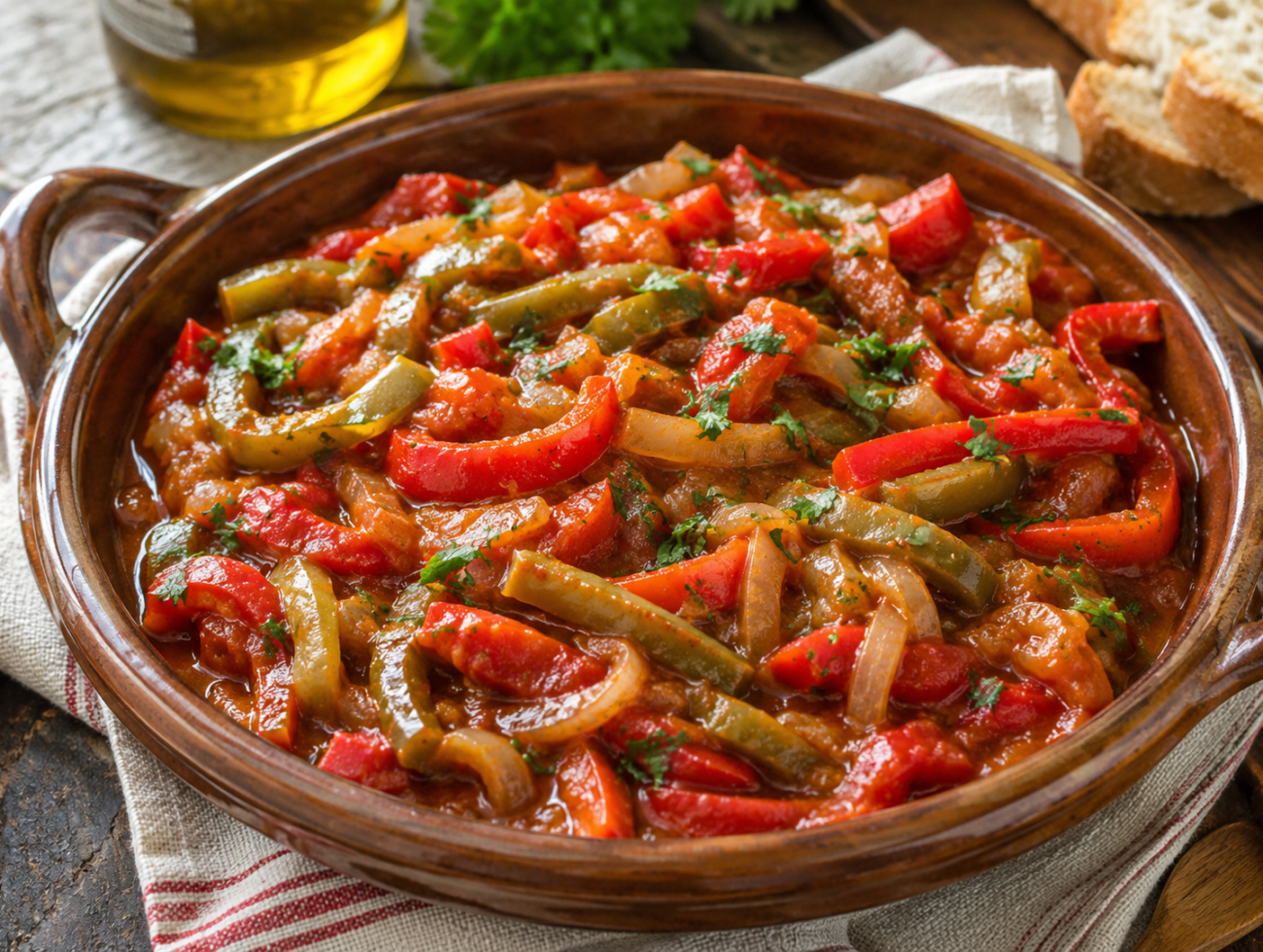
Piperrada is a colorful Basque preparation of peppers, onions, garlic, and tomatoes cooked slowly until soft, sweet, and deeply aromatic.
A touch of Espelette pepper gives the vegetables gentle warmth, making this versatile dish an excellent partner for fish, meat, eggs, or rustic bread.
Why You’ll Love This Recipe
- Roasting the peppers develops their natural sweetness and gives the dish a silky texture.
- The ingredient list is simple, affordable, and entirely plant-based.
- Espelette pepper adds aromatic warmth without making the dish aggressively spicy.
- It can be served hot, at room temperature, or cold depending on the meal.
- The flavor improves after resting, making piperrada an excellent make-ahead side dish.
Ingredient Notes
Red bell pepper
The red pepper contributes sweetness, color, and a soft texture after roasting. Choose a firm, glossy pepper without wrinkled skin.
Green bell peppers
Green peppers add a slightly bitter and grassy contrast to the sweeter red pepper and cooked onion.
Ripe tomatoes
Grating peeled tomatoes produces a fresh sauce while leaving behind the tougher skin. Canned whole tomatoes are a useful substitute outside tomato season.
Espelette pepper
This mildly hot Basque-French chile powder is fruity and aromatic. Sweet paprika with a tiny amount of cayenne is the easiest widely available US alternative.
Extra-virgin olive oil
A modest amount of olive oil helps soften the onion and carries the flavor of the peppers, garlic, and spices.
Expert Tips
- Turn the peppers halfway through roasting so all sides soften and blister evenly.
- Cover the hot roasted peppers briefly before peeling them because the trapped steam makes the skins easier to remove.
- Cook the onion slowly rather than browning it so it becomes sweet and tender without developing a toasted flavor.
- Keep the pan covered during the final simmer, but stir occasionally to prevent the tomato from sticking.
- Let the finished piperrada rest for at least 15 minutes before serving so the vegetable flavors can blend.
Serving Suggestions
Serve piperrada alongside grilled or baked fish, roasted chicken, pork, fried eggs, an omelet, or thick slices of crusty bread.
Storage and Reheating
Allow the piperrada to cool, then refrigerate it in a covered container for up to 4 days. Reheat it gently in a skillet over low heat or serve it at room temperature. It can be frozen for up to 2 months, although the peppers may become slightly softer after thawing.
Frequently Asked Questions
Is piperrada the same as Spanish pisto?
They are similar vegetable preparations, but piperrada focuses primarily on peppers, onion, tomato, and Espelette pepper, while pisto often includes zucchini or other vegetables.
What can I use instead of Espelette pepper?
Use sweet paprika mixed with a very small pinch of cayenne pepper. This provides mild heat and color, although the flavor will be less fruity.
Do I have to peel the roasted peppers?
Peeling them gives the piperrada a smoother and more delicate texture, but the skins can be left on when a more rustic result is acceptable.
Can piperrada be prepared in advance?
Yes. It often tastes even better the following day after the peppers, tomato, onion, and spices have had time to blend.
CuisineBasque, Spanish CourseSide Dish Yield4 servings NutritionApprox. 210 calories per serving
Ingredients
- 1 medium yellow onion, thinly sliced
- 3 garlic cloves, thinly sliced
- 3 ripe medium tomatoes
- 1 large red bell pepper
- 2 medium green bell peppers
- 2 tablespoons extra-virgin olive oil
- 2 pinches fine salt, divided, plus more as needed
- 1 pinch ground black pepper
- 1 teaspoon Espelette pepper powder; US alternative: sweet paprika with a small pinch of cayenne pepper
Instructions
- Preheat the oven to 320°F (160°C) with heat from above and below.
- Peel the onion and cut it into thin strips. Peel the garlic cloves and slice them thinly.
- Peel the ripe tomatoes, grate their flesh into a bowl, and discard the remaining skins.
- Wash and dry the red and green bell peppers. Place them on a baking sheet and roast for 45 minutes, turning them halfway through so they soften evenly.
- While the peppers roast, heat the extra-virgin olive oil in a wide skillet or shallow casserole over medium heat.
- Add the sliced onion and garlic. Season with one pinch of salt and the black pepper, then cook for about 15 minutes, stirring occasionally, until the onion is soft and translucent.
- Remove the roasted peppers from the oven and cover them loosely for several minutes so the trapped steam loosens their skins.
- Peel the peppers, remove the stems and seeds, and cut the flesh into thin strips.
- Add the pepper strips to the softened onion and garlic. Cook over medium heat for 5 minutes, stirring gently.
- Add the grated tomatoes, Espelette pepper powder, and the remaining pinch of salt.
- Reduce the heat to medium-low, cover the pan, and cook for 30 minutes, stirring occasionally, until the vegetables are very tender and the tomato juices have reduced.
- Taste and adjust the salt as needed. Serve the piperrada warm, at room temperature, or chilled as a vegetable side dish.
Notes
Espelette pepper powder may be difficult to find in a regular US supermarket. Sweet paprika mixed with a very small pinch of cayenne provides a practical alternative, although its flavor will not be identical.
Choose ripe, flavorful tomatoes because they form the base of the sauce. If fresh tomatoes are not in season, drained canned whole tomatoes can be used.
The green peppers traditionally used in Basque cooking can taste slightly sharper than standard US green bell peppers, but regular green bell peppers work well.
Piperrada can also be turned into a light main course by adding eggs near the end of cooking and allowing them to set gently among the vegetables.
The calorie value is based on four servings and includes all of the olive oil.

 Main Dishes