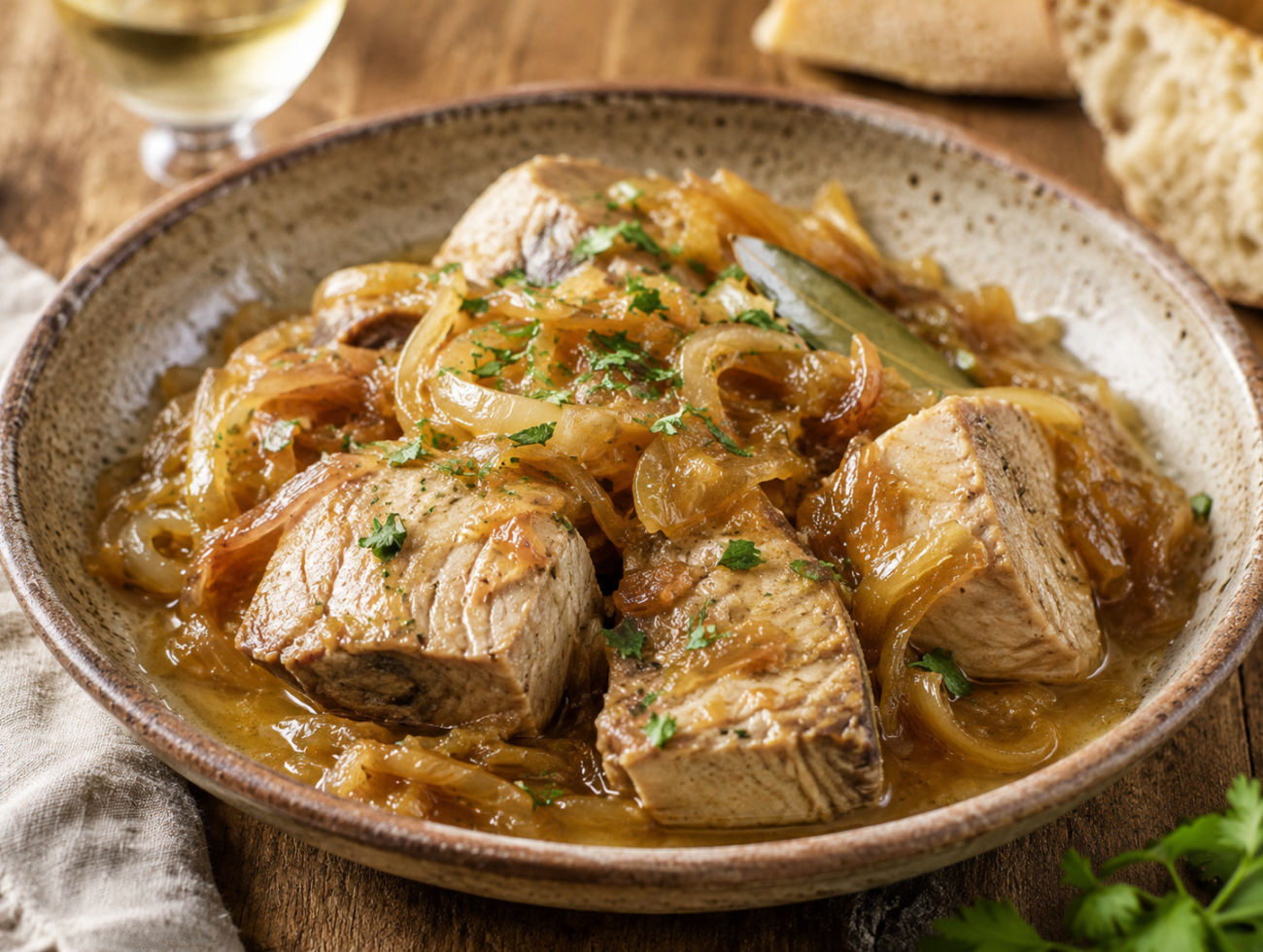
Bonito encebollado is a comforting Spanish fish dish built around two main ingredients: thick pieces of fresh bonito and a generous quantity of slowly softened onions. Garlic, sweet paprika, oregano, bay leaves, and dry white wine turn the onions into a deeply savory sauce that keeps the fish moist.
The bonito is added only during the final minutes of cooking, preventing this lean, meaty fish from becoming dry. Served hot with the silky onions spooned over the top, it makes a satisfying Mediterranean main course that can be prepared in one pot in about 40 minutes.
Why You’ll Love This Recipe
- Slow-cooked onions create a naturally sweet and flavorful sauce without cream or flour.
- The bonito cooks directly in the sauce, allowing it to absorb the white wine, paprika, and herb flavors.
- Large pieces of fish remain moist because they are added only during the final minutes.
- The entire main course is prepared in one pot with simple Mediterranean ingredients.
- The onion sauce pairs easily with potatoes, rice, vegetables, or gluten-free bread.
Ingredient Notes
Bonito del norte
Bonito del norte is albacore tuna caught in northern Spanish waters. It has pale, firm flesh and a delicate flavor. Fresh albacore steaks are the closest US substitute, although yellowfin tuna can also be used.
Yellow onions
Five onions may seem generous, but they cook down considerably and form the body of the sauce. Yellow onions provide a balanced sweetness without becoming overly sugary.
Sweet Spanish paprika
Use mild Spanish pimentón dulce rather than hot or strongly smoked paprika. Add the wine almost immediately after the paprika to prevent it from burning.
Dry white wine
The wine adds acidity and depth to the sweet onions. Choose a dry wine that you would enjoy drinking and avoid products labeled cooking wine because they may contain excessive salt.
Bay leaf and oregano
These herbs add a familiar Spanish aroma without masking the fish. Remove the bay leaves before serving and use oregano moderately so it remains in the background.
Expert Tips
- Cut the bonito into large pieces of similar size so they cook evenly and remain juicy.
- Cook the onions slowly rather than rushing them over high heat, which can brown the edges before the centers soften.
- Keep the garlic pale golden because deeply browned garlic may make the sauce bitter.
- Stir the paprika briefly and add the wine immediately to protect it from scorching.
- Avoid crowding or repeatedly stirring the fish once it is in the pot, since cooked bonito can break apart.
- Begin checking the fish after 8 minutes and remove the pot from the heat as soon as the center is opaque.
- Let the residual heat finish any slightly underdone pieces rather than extending the cooking time.
Serving Suggestions
Serve the bonito with french fries, roasted potatoes, or boiled baby potatoes to absorb the onion and white wine sauce.
For a lighter meal, accompany it with sautéed green beans, roasted peppers, zucchini, or a crisp green salad.
White rice flavored with garlic and olive oil also makes a simple traditional-style accompaniment.
Pair the dish with the same dry white wine used in the sauce, such as Albariño or Verdejo.
Storage and Reheating
Refrigerate leftovers in an airtight container within 2 hours and consume them within 2 days. Store the fish covered with the onion sauce to help prevent it from drying out. Reheat very gently in a covered skillet over low heat, adding a tablespoon of water if the sauce has thickened. Stop heating as soon as the fish is warmed through. Freezing is possible for up to 1 month, although the bonito may be slightly drier after thawing.
Frequently Asked Questions
Can I use regular tuna instead of bonito del norte?
Yes. Fresh albacore tuna is the closest equivalent, but yellowfin tuna steaks also work. Use thick pieces and avoid overcooking them.
Why did my bonito turn out dry?
Bonito becomes dry when cooked too long or at a hard boil. Add it only after the onion sauce is ready and simmer it gently for about 8 to 10 minutes.
Can I prepare the onion sauce ahead of time?
Yes. Cook the sauce up to 2 days ahead and refrigerate it in a covered container. Reheat it gently before adding and cooking the fresh fish.
Can I make bonito encebollado without wine?
Yes. Replace the wine with additional water or unsalted fish stock and add 1 to 2 teaspoons of mild wine vinegar or lemon juice at the end for acidity.
CuisineSpanish, Mediterranean CourseMain Course Yield4 servings NutritionApprox. 590 calories per serving
Ingredients
- 2 pounds (1 kg) fresh bonito del norte steaks, or fresh albacore tuna steaks
- 5 medium yellow onions, diced
- 2 garlic cloves, thinly sliced
- 2/3 cup (150 ml) dry white wine
- 7 tablespoons (100 ml) extra-virgin olive oil
- 1 tablespoon (15 g) sweet Spanish paprika
- 2 bay leaves
- 1 teaspoon dried oregano, or to taste
- 1/2 cup (125 ml) water
- Fine sea salt, to taste
- Freshly ground black pepper, to taste
- 2 tablespoons chopped fresh parsley
Instructions
- Remove the skin, central bones, and any dark bloodline from the bonito steaks, then cut the fish into large, evenly sized pieces. Pat them dry and set aside.
- Heat the olive oil in a wide, heavy-bottomed pot or deep skillet over medium-low heat.
- Add the diced onions and sliced garlic. Cook gently for about 15 minutes, stirring occasionally, until the onions are very soft, translucent, and beginning to turn golden.
- Add the bay leaves, oregano, and sweet paprika. Stir for only a few seconds so the paprika becomes fragrant without scorching.
- Immediately pour in the white wine and scrape the bottom of the pot to release any flavorful browned bits.
- Increase the heat slightly and simmer the wine for about 3 minutes so it reduces and loses its harsh alcoholic aroma.
- Add the water and bring the onion mixture to a gentle boil.
- Reduce the heat to medium-low and cook the sauce for 5 minutes so the onions soften further and the flavors blend.
- Season the bonito pieces with salt and black pepper, then nestle them into the onion sauce in a single layer.
- Cover partially and cook gently for 8 to 10 minutes, turning the pieces once if necessary, until the fish is opaque but still juicy and reaches 145°F (63°C) in the center.
- Remove the bay leaves, taste the sauce, and adjust the salt and pepper.
- Sprinkle with chopped parsley and serve the bonito immediately with plenty of onions and sauce.
Notes
Bonito del norte is the Spanish name commonly used for North Atlantic albacore tuna. Fresh albacore tuna steaks are the closest practical US alternative, while yellowfin tuna can also be used if albacore is unavailable.
Ask the fishmonger for thick steaks so the fish remains juicy while it cooks in the onion sauce.
Do not cook the paprika for more than a few seconds before adding the wine because burned paprika develops a bitter flavor.
The sauce should simmer gently after the fish is added. Vigorous boiling can dry out the bonito and cause the pieces to break apart.
Use a dry white wine such as Albariño, Verdejo, Sauvignon Blanc, or an unoaked Pinot Grigio rather than a sweet cooking wine.
The calorie estimate assumes approximately 26 to 28 ounces of edible fish after removing skin and bones and that about three-quarters of the olive oil remains in the sauce and is consumed.
Check the labels on the paprika, dried herbs, and wine when preparing the recipe for specific dietary or intolerance needs.
The dietary and intolerance categories describe the written formulation only and do not guarantee the absence of cross-contact.

 Main Dishes