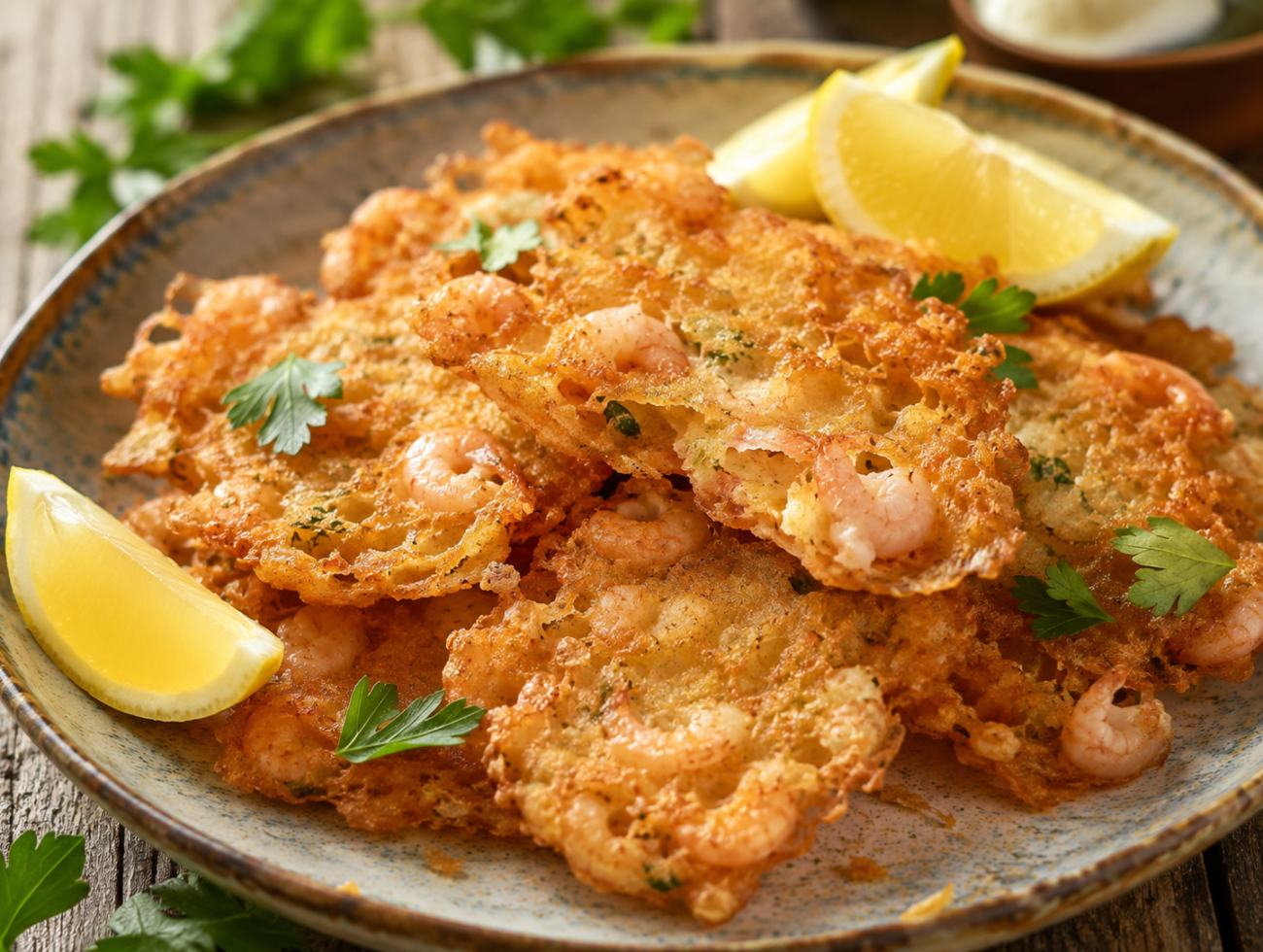
Tortillitas de camarones are thin, crisp shrimp fritters associated with Cádiz and the nearby city of San Fernando in southern Spain. Tiny shrimp are suspended in a loose batter made with wheat flour, chickpea flour, scallions, and fresh parsley.
Unlike thick American-style fritters, these tapas are spread very thin in hot olive oil so they develop delicate, irregular edges and a light crunch. They are best served immediately, while the centers remain tender and the edges are still crisp.
Why You’ll Love This Recipe
- The paper-thin fritters develop exceptionally crisp, lacy edges.
- Tiny shrimp add savory seafood flavor to every bite.
- Chickpea flour gives the batter its traditional golden color and distinctive flavor.
- The recipe contains no eggs or dairy products.
- They make an impressive Cádiz-style tapa with a short ingredient list.
Ingredient Notes
Tiny shrimp or camarones
Traditional Cádiz fritters use very small shrimp that can be eaten whole. In the United States, use tiny salad shrimp or the smallest locally available shrimp as a practical substitute.
Chickpea flour
Chickpea flour contributes flavor, color, and a crisp texture. It may be labeled garbanzo bean flour or gram flour in US stores.
Scallion
Chop the white and light green portions very finely so they soften quickly during the brief frying time.
Ice-cold water
Cold water helps create a light batter. Add it gradually and adjust after resting because both types of flour continue absorbing moisture.
Olive oil
Olive oil provides the most traditional flavor. Use enough to let the thin batter float slightly rather than stick directly to the skillet.
Expert Tips
- Use a wide skillet or paella pan so the fritters have room to spread without touching.
- Finely chop the scallion and parsley because large pieces can prevent the batter from spreading evenly.
- Keep the batter cold until frying and stir it before every batch to redistribute the shrimp.
- Spread each spoonful immediately after it enters the oil to create a thin fritter rather than a thick pancake.
- Maintain the oil near 350°F (175°C); cooler oil produces greasy fritters, while excessively hot oil burns the edges before the center cooks.
- Fry only a few fritters at a time so the oil temperature remains steady.
Serving Suggestions
Serve the fritters immediately as part of a tapas spread with marinated olives, roasted peppers, and a simple tomato salad.
Pair them with lemon wedges for guests who enjoy extra acidity, although they are traditionally flavorful enough to serve without sauce.
For a light meal, accompany the tortillitas with gazpacho, salmorejo, or a crisp green salad.
Storage and Reheating
Tortillitas de camarones are best eaten immediately after frying. Refrigerate leftovers in a covered container for up to 2 days. Reheat them in a single layer on a wire rack in a 400°F (205°C) oven for 5 to 8 minutes or in an air fryer at 375°F (190°C) for 3 to 5 minutes. Microwaving is not recommended because it makes the fritters soft. The mixed batter should be used the same day and kept refrigerated until frying.
Frequently Asked Questions
What can I use instead of Spanish camarones?
Use the smallest fresh or frozen salad shrimp available. Thaw and dry frozen shrimp thoroughly, and finely chop them only when they are much larger than traditional camarones.
Why are my shrimp fritters not crispy?
The batter may be too thick, the fritters may not have been spread thinly enough, or the oil temperature may have been too low. Add a little cold water and keep the oil close to 350°F (175°C).
Can I make tortillitas de camarones without chickpea flour?
Yes, you can replace it with additional all-purpose flour, although the flavor, golden color, and texture will be less traditional. A small pinch of turmeric can restore some of the color.
Can the batter be prepared ahead of time?
Yes. Prepare it several hours in advance and keep it covered in the refrigerator. Whisk it well and adjust the consistency with a small amount of cold water immediately before frying.
CuisineSpanish, Andalusian CourseAppetizer, Tapas Yield6 servings NutritionApprox. 250 calories per serving
Ingredients
- 3 1/2 ounces (100 g) tiny fresh shrimp or camarones, rinsed and drained
- 3/4 cup plus 1 tablespoon (100 g) all-purpose flour
- 3/4 cup plus 1 tablespoon (100 g) chickpea flour
- 1/2 cup (50 g) scallion, very finely chopped
- 1/4 cup finely chopped fresh flat-leaf parsley
- 1 cup (250 ml) ice-cold water, plus 1 to 2 tablespoons if needed
- 1/2 teaspoon fine salt, or to taste
- Extra-virgin olive oil, enough to form a 1/4-inch layer in the skillet, for frying
Instructions
- Combine the all-purpose flour and chickpea flour in a large mixing bowl.
- Add the finely chopped scallion, parsley, tiny shrimp, and salt, then stir until the ingredients are evenly distributed.
- Gradually whisk in 1 cup of ice-cold water until the batter is smooth, loose, and noticeably thinner than pancake batter.
- Cover the bowl and refrigerate the batter for 30 minutes.
- After resting, whisk the batter again and add 1 to 2 tablespoons of cold water if needed. It should spread immediately when spooned into the pan.
- Pour enough olive oil into a wide skillet or paella pan to form a layer about 1/4 inch deep and heat it over medium-high heat to approximately 350°F (175°C).
- Stir the batter before each batch so the shrimp remain evenly distributed.
- Spoon small portions of batter into the hot oil, using the back of the spoon to spread each portion into a very thin, irregular round.
- Fry for about 1 minute per side, turning once, until the fritters are crisp, lacy, and golden around the edges.
- Transfer the fritters to a paper towel-lined plate and continue frying in small batches, allowing the oil to return to temperature between batches.
- Serve the tortillitas immediately while hot and crisp.
Notes
Spanish camarones are extremely small shrimp traditionally added whole. When they are unavailable, use the smallest fresh or thawed frozen salad shrimp you can find and chop them only if they are larger than bite-size.
The batter must be very loose so it spreads into thin fritters with crisp, lacy edges. A thick batter will produce heavy, soft fritters.
Chickpea flour is commonly sold as garbanzo bean flour in US supermarkets, natural-food stores, and Indian grocery stores.
The calorie estimate includes approximately 1/3 cup of olive oil absorbed by the full batch during frying rather than all the oil placed in the skillet.
The free-from categories describe the written ingredients only. Flour, chickpea flour, and shared frying equipment may be exposed to cross-contact during production or preparation.
 Main Dishes