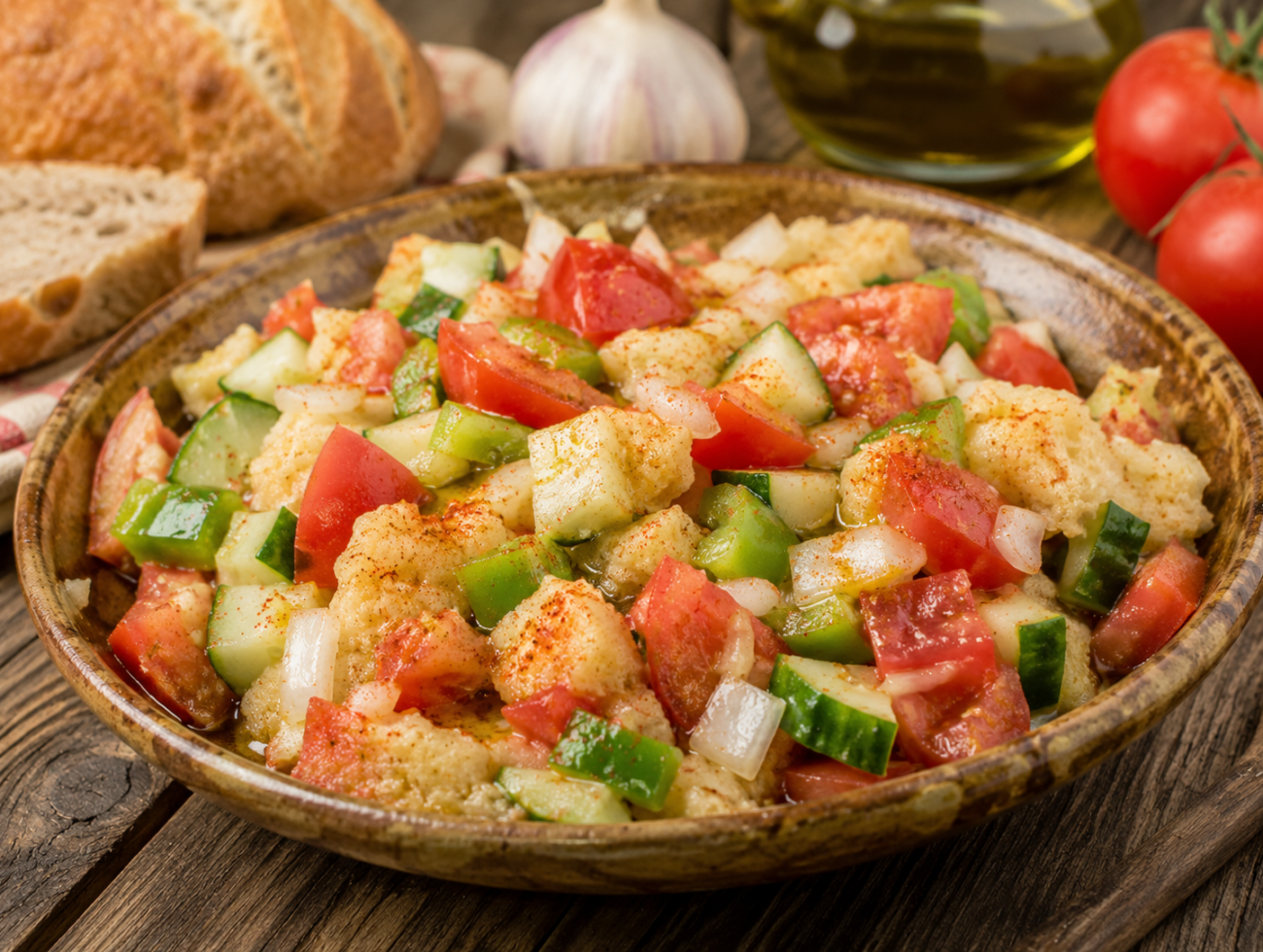
Cojondongo is a traditional summer dish from Extremadura that combines chopped tomatoes and peppers with day-old bread, hard-boiled eggs, and a distinctive mortar-made garlic dressing.
Unlike gazpacho, the vegetables remain in bite-size pieces, while the emulsified bread, olive oil, vinegar, and garlic dressing gives the rustic salad a creamy texture and bold flavor.
Why You’ll Love This Recipe
- It transforms ripe summer vegetables and leftover bread into an economical and satisfying meal.
- The mortar-made dressing is creamy and flavorful without mayonnaise or dairy.
- Chilling allows the bread to absorb the tomato juices, vinegar, garlic, and olive oil.
- Hard-boiled eggs add enough protein and richness to serve the dish as a light main course.
- Most of the recipe can be prepared several hours ahead and finished just before serving.
Ingredient Notes
Day-old country bread
Use bread with a dense, firm crumb. The soft interior thickens the dressing, while pieces with crust provide texture in the finished salad.
Ripe tomatoes
Choose flavorful tomatoes that are ripe but still firm enough to hold their shape after chopping and chilling. Roma, plum, or good-quality vine tomatoes work well.
Green and red peppers
Green pepper adds freshness and a slightly grassy flavor, while red pepper contributes sweetness. Cut both into small pieces so they mix evenly with the tomatoes.
Extra-virgin olive oil
The olive oil is used raw and remains prominent in the dressing, so choose a fruity oil with a clean flavor and moderate bitterness.
Red wine vinegar
Wine vinegar provides the sharpness needed to balance the bread and olive oil. Begin with the measured amount and add more only after tasting the completed dressing.
Expert Tips
- Moisten the bread crumb without completely submerging it so it softens while remaining easy to squeeze dry.
- Remove the green germ from the garlic when present to reduce bitterness and create a cleaner raw garlic flavor.
- Add the olive oil to the mortar very gradually so the garlic and bread can form a stable emulsion.
- Keep the dressing slightly stronger and sharper than seems necessary because it must season all the vegetables and bread.
- Reserve about one-third of the dressing until serving so the finished dish retains moisture and fresh garlic flavor.
- Chill the salad for at least 1 hour because the resting time is essential for blending the flavors and softening the crust-on bread.
Serving Suggestions
Serve the cojondongo well chilled as a first course, light lunch, or rustic summer dinner with additional crusty bread on the side.
For a traditional seasonal variation, accompany it with a small bunch of chilled grapes, whose sweetness contrasts with the garlic and vinegar dressing.
Storage and Reheating
Store the cojondongo in an airtight container in the refrigerator for up to 2 days. Keep any reserved dressing, additional bread, and hard-boiled egg separate when preparing it ahead so they can be added shortly before serving. The dish should be served cold and should not be reheated or frozen, since freezing damages the texture of the raw tomatoes, peppers, eggs, and soaked bread.
Frequently Asked Questions
What is the difference between cojondongo and gazpacho?
Gazpacho is blended into a smooth, pourable soup, while cojondongo contains chopped vegetables and bread pieces dressed with a separately prepared garlic, bread, oil, and vinegar emulsion.
Can I prepare the dressing without a mortar?
Yes. Pulse the garlic, soaked bread, olive oil, vinegar, salt, and water briefly in a small food processor, but avoid blending it completely smooth because the traditional dressing retains some texture.
How can I fix a separated dressing?
Add a small amount of well-drained soaked bread and continue mixing vigorously. The bread helps absorb the oil and usually brings the emulsion back together.
Can cojondongo be made one day ahead?
Yes, although the bread and vegetables will become softer. Reserve some dressing and crust-on bread separately and add them with the eggs shortly before serving to restore moisture and texture.
CuisineSpanish (Extremaduran) CourseAppetizer, Main Course, Salad Yield4 servings NutritionApprox. 270 calories per serving
Ingredients
- 2 ounces (55 g) crumb from day-old dense country bread
- 1 large garlic clove, peeled, germ removed, and roughly chopped, or 2 cloves for a stronger flavor
- 1/4 teaspoon coarse sea salt, plus more to taste
- 3 tablespoons plus 1 teaspoon (50 ml) extra-virgin olive oil
- 2 tablespoons (30 ml) red wine vinegar, plus more to taste
- About 1/3 cup (80 ml) cold water, divided, plus more as needed
- 4 medium ripe but firm tomatoes, about 1 1/4 pounds (570 g), cored and cut into bite-size pieces
- 1/2 large green bell pepper or 1 small Cubanelle pepper, stemmed, seeded, and diced
- 1/2 medium red bell pepper, stemmed, seeded, and diced
- 2 slices day-old dense country bread with crust, about 2 1/2 ounces (70 g), torn into bite-size pieces
- 2 large eggs
- 1/4 small red or yellow onion, thinly sliced, optional
- 1/2 teaspoon fine salt, plus more to taste
Instructions
- Place the bread crumb in a bowl, add just enough cold water to moisten it without completely covering it, and let it soak for 15 minutes.
- Meanwhile, place the eggs in a small saucepan, cover them with cold water, and bring to a boil. Cook for 10 minutes, then transfer them to cold water, peel them, and set them aside.
- Place the garlic and coarse salt in a mortar and pound them into a smooth paste.
- Add about 1 tablespoon of the olive oil in a very thin stream while stirring continuously with the pestle until the garlic begins to emulsify.
- Squeeze the excess water from the soaked bread crumb, add it to the mortar, and pound until it is thoroughly combined with the garlic mixture.
- Gradually work in the remaining olive oil, adding only a little at a time, until the dressing becomes thick, glossy, and evenly emulsified.
- Stir in the red wine vinegar and enough cold water to create a pourable dressing with a consistency similar to a light mayonnaise. Taste and adjust the salt, vinegar, or water as needed.
- If using onion, soak the sliced onion in cold water for 10 minutes to soften its flavor, then drain and pat it dry.
- Place about half of the crust-on bread pieces in the bottom of a large serving bowl.
- Add the chopped tomatoes, green pepper, red pepper, optional onion, and fine salt, then toss gently to combine.
- Pour about two-thirds of the bread and garlic dressing over the vegetables and mix carefully.
- Cover and refrigerate for at least 1 hour, preferably 2 to 3 hours, so the bread absorbs the dressing and the vegetable juices blend with it.
- Cut the hard-boiled eggs into quarters and arrange them over the chilled salad with the remaining crust-on bread.
- Spoon the reserved dressing over the top and serve the cojondongo cold.
Notes
The calorie estimate includes all the bread, eggs, vegetables, and 50 ml of olive oil because the oil is emulsified into the dressing and served with the complete dish. The estimated total is approximately 1,080 calories divided among four servings.
Pan candeal or another dense Spanish country loaf is traditional. A day-old unsweetened artisan white loaf with a compact crumb is the most practical US substitute.
A Cubanelle pepper provides a mild flavor similar to Spanish frying peppers and is a useful alternative to green bell pepper in the United States.
The onion is optional and may be omitted for a more traditional version with a milder overall flavor.
Check the bread label when avoiding dairy, soy, sesame, peanuts, or tree nuts because packaged and bakery loaves may contain these ingredients or be produced on shared equipment.
The preparation and cooking times do not include the minimum 1-hour refrigeration period.

 Main Dishes