 Main Dishes
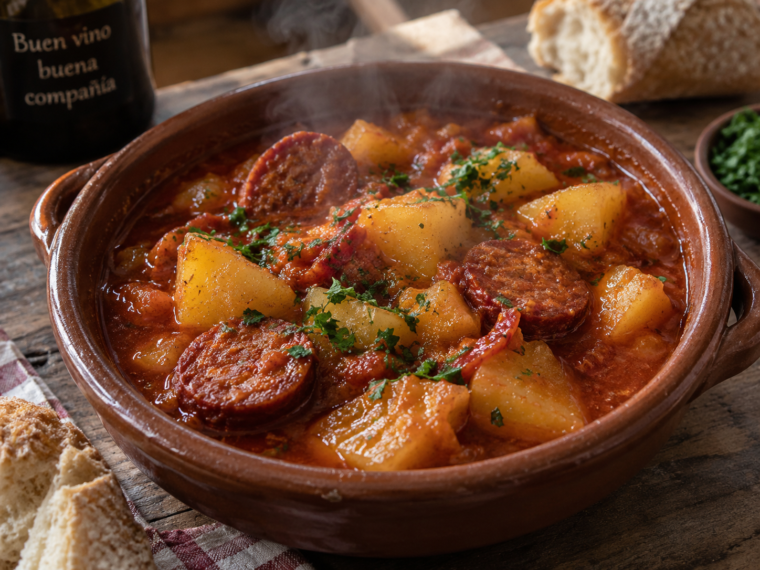
Rioja-Style Potatoes with Chorizo
Patatas a la riojana is a warming potato and chorizo stew associated with La Rioja, built from humble ingredients that develop remarkable depth as they simmer together.
Get the Recipe →Tender hake steaks gently cooked in a classic Basque parsley sauce with garlic, onion, white wine, and fish stock, with optional clams and white asparagus.
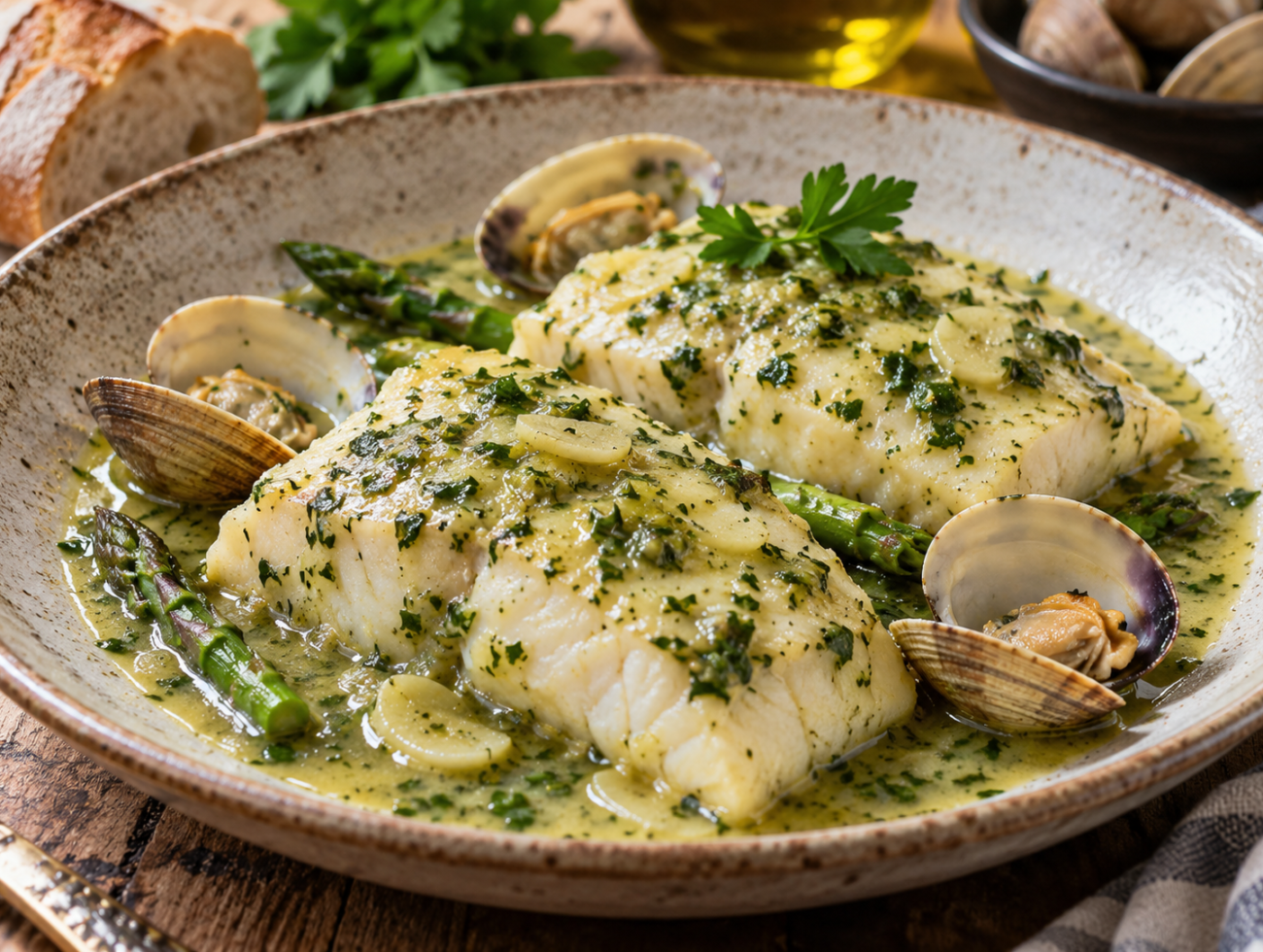
Merluza en salsa verde is one of the best-known fish dishes of Basque cooking, pairing delicate hake with a light sauce flavored generously with fresh parsley, garlic, white wine, and fish stock.
The basic preparation is simple enough for a weeknight dinner, while optional clams and white asparagus turn it into an elegant seafood dish suitable for entertaining.
Hake has delicate white flesh and a mild flavor that works especially well with parsley sauce. Ask for thick steaks of similar size so they cook at the same rate.
Use a generous amount of flat-leaf parsley rather than dried parsley. Its fresh flavor and color are essential to the character of salsa verde.
A mild homemade fumet produces the cleanest flavor. When using packaged stock, choose a low-sodium variety so the sauce can be seasoned accurately at the end.
Choose a dry white wine that you would also enjoy drinking. Sweet or heavily oaked wines can overpower the delicate hake.
Both are optional additions commonly paired with Basque-style hake. Small littleneck or Manila clams are useful US choices, while canned white asparagus is widely available in larger supermarkets and specialty stores.
Serve the hake immediately in shallow bowls or plates with plenty of green sauce spooned over the top and crusty bread for dipping.
For a complete Spanish-style meal, accompany it with boiled or roasted potatoes, peas, white asparagus, or a simple green salad.
Refrigerate leftover hake and sauce in an airtight container within 2 hours and use within 2 days. Reheat very gently in a covered skillet over low heat with a tablespoon or two of fish stock or water until the fish reaches 165°F (74°C). Avoid vigorous simmering or prolonged microwave reheating because hake dries out easily. If the recipe contains clams, reheat them only once. Freezing is possible for the basic fish and sauce for up to 2 months, although the texture of the hake may become softer after thawing.
Cod is the easiest substitute, while haddock or halibut also work well. Choose thick pieces and adjust the cooking time according to their thickness.
Yes. The classic basic sauce needs only hake, garlic, onion, parsley, wine, stock, flour, and olive oil. The clams and asparagus are optional additions.
Allow the flour, wine, and stock mixture to simmer gently before adding the fish. If necessary, remove the cooked hake and reduce the sauce for another minute or two rather than overcooking the fish.
The sauce can be prepared several hours ahead and refrigerated. Reheat it gently, then add the parsley, hake, and optional clams shortly before serving for the best fish texture.
Fork & Olé Recipe
The calorie estimate assumes approximately 22 ml of the 30 ml olive oil remains in and is consumed with the finished dish, four hake steaks totaling about 620 g, and includes the optional clams and asparagus. The estimated recipe total is approximately 1,040 calories divided among four servings.
Fresh hake can be difficult to find in some parts of the United States. Cod, haddock, or halibut are practical substitutes, although their texture and flavor differ slightly.
Use a dry, unoaked white wine such as Sauvignon Blanc, Pinot Grigio, or a Spanish-style dry white wine.
If using clams, scrub them thoroughly and discard any cracked shells or open clams that do not close when tapped before cooking.
The all-purpose flour thickens the sauce, so this recipe is not gluten-free or wheat-free as written.
Check packaged fish stock and canned asparagus labels when avoiding dairy, eggs, soy, sesame, peanuts, or tree nuts because commercial formulations vary.
Keep cooking
Main Dishes
Patatas a la riojana is a warming potato and chorizo stew associated with La Rioja, built from humble ingredients that develop remarkable depth as they simmer together.
Get the Recipe →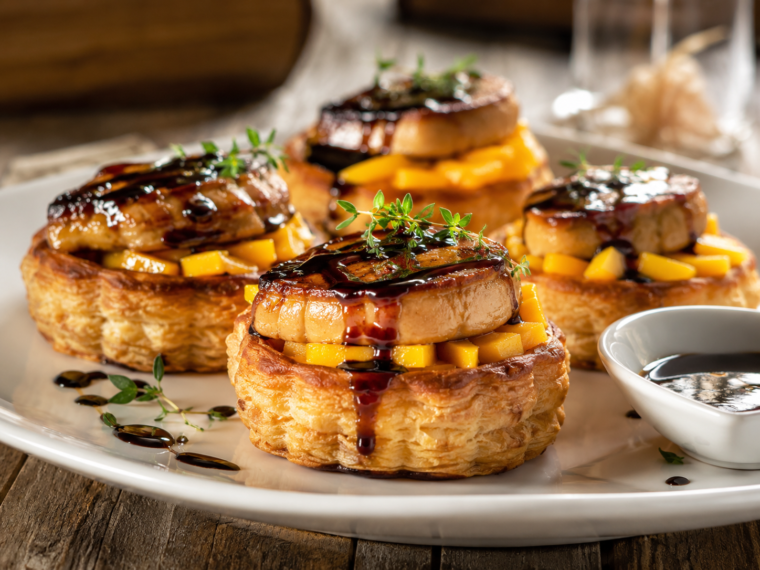 Mediterranean Recipes
These mango and foie gras puff pastry tartlets combine crisp pastry with two contrasting toppings: sweet fruit glazed in Pedro Ximénez and rich, quickly seared foie gras. Flaky sea salt and fresh rosemary sharpen the flavors
Get the Recipe →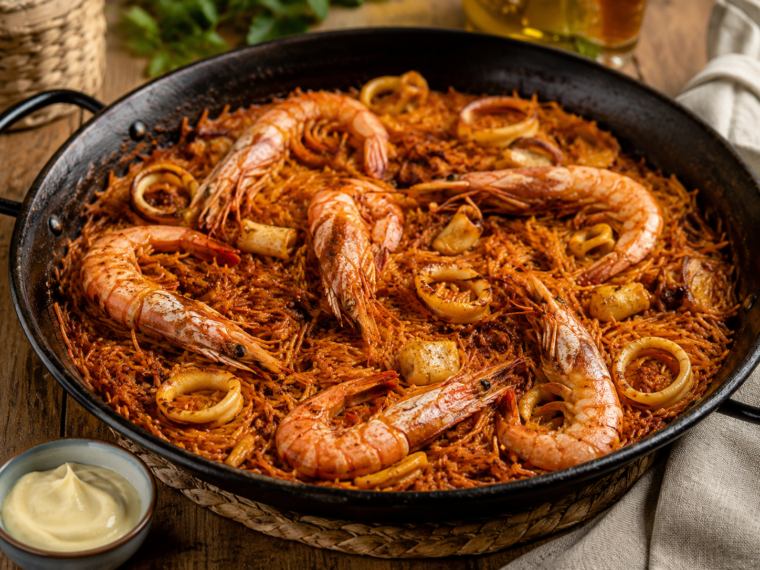 Main Dishes
Seafood fideuá is one of the great dishes of Spain's Valencian coast, replacing the rice associated with paella with short toasted noodles cooked in an intensely flavored seafood broth. This version combines squid and jumbo shrimp
Get the Recipe →