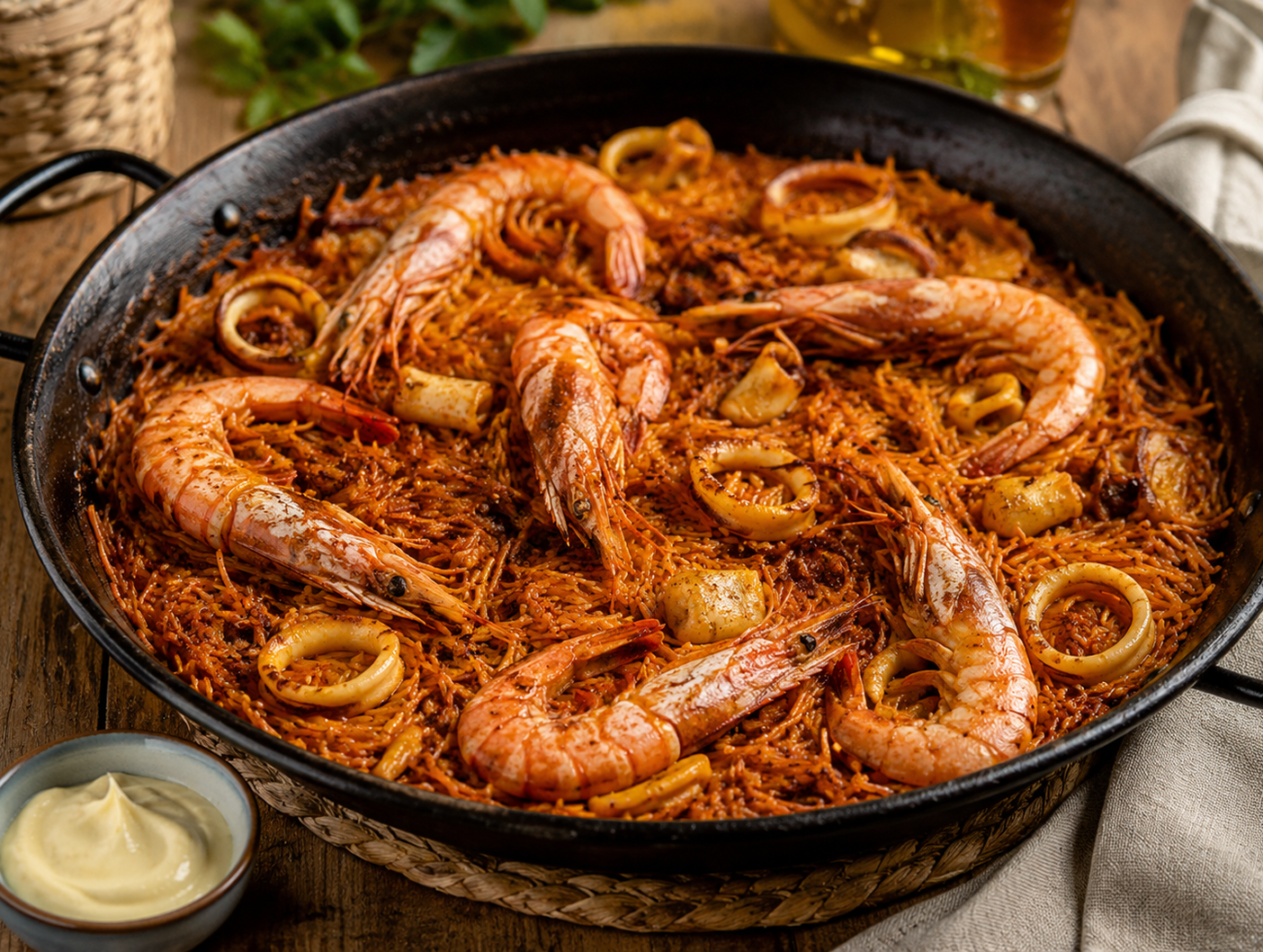
Seafood fideuá is one of the great dishes of Spain's Valencian coast, replacing the rice associated with paella with short toasted noodles cooked in an intensely flavored seafood broth. This version combines squid and jumbo shrimp with a concentrated tomato, onion, and garlic sofrito for a deeply savory dish with plenty of Mediterranean character.
The noodles are toasted before the broth is added, then finished in a very hot oven until they absorb the seafood flavors and develop a lightly crisp surface. Served with creamy garlic aioli on the side, the contrast between the toasted noodles, tender seafood, and cool garlicky sauce makes this an impressive but approachable main course.
Why You’ll Love This Recipe
- Toasting the noodles before adding the broth creates a deeper flavor and the characteristic texture of a well-made fideuá.
- Cooking the shrimp heads in the pan adds concentrated shellfish flavor without requiring a homemade stock.
- The tomato, onion, and garlic sofrito provides a rich savory foundation for the seafood broth.
- Finishing the fideuá in a very hot oven creates the distinctive browned surface and upright noodle tips.
- Homemade garlic aioli adds a creamy, garlicky contrast that diners can spoon onto each serving according to taste.
Ingredient Notes
Fine fideuá noodles
Fine No. 2 fideuá noodles are short durum-wheat pasta designed to absorb broth while retaining some structure. Broken thin spaghetti or vermicelli is the most convenient US alternative.
Squid
Use cleaned squid bodies and tentacles and cut them into small, even pieces. Cooking them briefly at the beginning and then returning them to the noodles keeps the texture tender.
Jumbo shrimp
Shell-on shrimp are especially useful because the heads and shells flavor the cooking oil. The peeled tails are cooked only briefly so they remain juicy.
Seafood broth
The broth is responsible for much of the finished dish's flavor. A prepared Spanish fideuá broth is convenient, while a flavorful fish-and-shellfish stock is the best widely available substitute.
Grated tomatoes
Grating ripe tomatoes separates much of the flesh from the skin and creates a smooth base that reduces quickly into the sofrito.
Garlic aioli
The accompanying sauce is a quick garlic mayonnaise made from egg, oil, garlic, lemon, and salt. A neutral or mild oil keeps the garlic flavor prominent without creating bitterness.
Expert Tips
- Use a wide, shallow oven-safe pan so the noodles cook in a relatively thin layer and develop more browned surface area.
- Press the shrimp heads firmly while frying them to extract their flavorful juices before discarding them.
- Cook the grated tomato until most of its water has evaporated because a concentrated sofrito gives the fideuá much more flavor.
- Stir the noodles continuously while toasting because fine pasta can change from golden to burned very quickly.
- Add the seafood broth hot so the cooking process does not stop when the liquid enters the pan.
- Do not wait until the stovetop broth has completely disappeared before transferring the pan to the oven; the noodles need some liquid to finish cooking.
- Return the shrimp only near the end because large shrimp become tough when exposed to prolonged heat.
- When making the garlic aioli, keep the immersion blender stationary against the bottom until a stable emulsion forms before moving it upward.
- Let the finished fideuá rest for several minutes before serving so the remaining moisture redistributes through the noodles.
Serving Suggestions
Bring the fideuá to the table in its cooking pan and serve the garlic aioli separately so diners can spoon it onto their individual portions.
Start the meal with a simple tomato salad, marinated olives, or roasted peppers to keep the focus on the seafood main course.
Serve with lemon wedges if you enjoy additional acidity, although the dish is flavorful enough without them.
Pair the fideuá with a chilled Valencian white wine, Albariño, dry sparkling wine, or cold sparkling water with lemon.
Storage and Reheating
Refrigerate leftover fideuá and garlic aioli separately in airtight containers within 2 hours. Consume the seafood fideuá within 2 days and homemade egg-based aioli within 1 to 2 days. Reheat the fideuá in a 350°F (175°C) oven, loosely covered, until hot throughout, adding a tablespoon or two of seafood broth if it seems dry. The aioli should remain cold and must not be reheated. Freezing the finished fideuá is not recommended because both the seafood and fine noodles can lose their ideal texture.
Frequently Asked Questions
What can I use instead of fideuá noodles?
Break thin spaghetti or vermicelli into approximately 1-inch pieces. Toast the pieces in the pan and monitor them closely because very thin pasta cooks quickly.
Can I make seafood fideuá without the oven?
Yes. After adding the broth, continue cooking the noodles gently on the stovetop until tender and most of the liquid is absorbed. The surface will not develop exactly the same toasted finish.
Why are the noodles toasted before adding the broth?
Toasting gives the noodles a nutty flavor, helps them retain structure as they absorb the broth, and contributes to the distinctive texture of fideuá.
Can I prepare the garlic aioli ahead of time?
Yes. Prepare it several hours ahead with a pasteurized egg, cover it tightly, and keep it refrigerated at 40°F (4°C) or colder until serving.
CuisineSpanish, Valencian CourseMain Course Yield6 servings NutritionApprox. 610 calories per serving
Ingredients
- 4 1/4 cups (1 liter) Gallina Blanca Caldo para Fideuá Fácil de Marisco seafood broth
- 3 ounces (350 g) fine fideuá noodles, size No. 2
- 7 ounces (200 g) cleaned squid, cut into bite-size pieces or rings
- 6 raw jumbo prawns or jumbo shrimp, shell on
- 1/2 medium yellow onion, finely chopped
- 2 ripe tomatoes, grated
- 2 garlic cloves, finely chopped
- 3 tablespoons extra-virgin olive oil, plus more if needed
- Fine sea salt, to taste
- 1 cup minus 3 tablespoons (200 ml) mild olive or sunflower oil, for the garlic aioli
- 1 large pasteurized egg, at room temperature
- 1 garlic clove, peeled
- 1 teaspoon fresh lemon juice
- 1/4 teaspoon fine sea salt, for the garlic aioli
Instructions
- Heat the oven to 465°F (240°C) with heat from both the top and bottom.
- Peel the jumbo shrimp, keeping the heads and shells. Pat the shrimp tails dry and set them aside.
- Heat a wide oven-safe paella pan or skillet over medium-high heat with about 1 tablespoon of the olive oil.
- Sear the peeled shrimp tails briefly on both sides until they just begin to change color, then transfer them to a plate before they are fully cooked.
- Add the squid to the same pan and cook for 2 to 3 minutes, until it releases some of its moisture and begins to turn opaque. Transfer it to the plate with the shrimp.
- Add the shrimp heads and shells to the pan and cook them for 2 to 3 minutes, pressing firmly with a wooden spoon to release their flavorful juices into the oil.
- Remove and discard the shrimp heads and shells, leaving the flavored oil in the pan.
- Add another tablespoon of olive oil if the pan looks dry, then add the chopped onion and garlic.
- Cook over medium-low heat for 5 to 7 minutes, stirring occasionally, until the onion is soft and beginning to turn golden.
- Add the grated tomatoes and cook for 6 to 8 minutes, stirring occasionally, until most of their liquid has evaporated and the mixture has become a concentrated sofrito.
- Transfer the sofrito to a blender or use an immersion blender to purée it until smooth, then reserve.
- Return the pan to medium heat and add the remaining olive oil if needed.
- Add the fine noodles and toast them for 3 to 5 minutes, stirring constantly, until evenly golden but not burned.
- Return the squid to the pan and stir in the blended sofrito until the noodles and seafood are evenly coated.
- Heat the seafood broth separately until steaming, then carefully pour it over the noodles.
- Taste the broth and add salt only if necessary, since prepared seafood broth can already be quite salty.
- Cook the fideuá on the stovetop over medium-high heat for 5 minutes, leaving a little visible broth in the pan so the noodles can finish cooking in the oven.
- Transfer the pan to the hot oven and bake until the noodles are tender, the remaining broth has been absorbed, and the surface is lightly browned with some noodle tips standing upright, about 5 to 8 minutes.
- Arrange the reserved shrimp tails over the fideuá during the final 2 to 3 minutes of baking so they finish cooking without becoming tough.
- Meanwhile, prepare the garlic aioli by placing the pasteurized egg, garlic clove, lemon juice, salt, and oil in a narrow immersion-blender cup.
- Place the blender head flat against the bottom of the cup and blend without moving it until a thick emulsion begins to form.
- Slowly raise and lower the blender until all the oil is incorporated and the garlic aioli is thick and creamy.
- Remove the fideuá from the oven and let it rest for 3 to 5 minutes.
- Serve hot with the garlic aioli on the side so each diner can add as much as desired.
Notes
Fine fideuá noodles are short durum-wheat pasta traditionally used for this Valencian dish. If they are difficult to find in an ordinary US supermarket, thin spaghetti or vermicelli broken into approximately 1-inch pieces is a practical substitute.
Gallina Blanca's seafood fideuá broth contains seafood including fish, crustaceans, and mollusks. In the United States, use 4 1/4 cups of good-quality seafood stock as the practical alternative, preferably one made with both fish and shellfish.
The prepared seafood broth is naturally quite salty, so taste the dish before adding additional salt.
Gambón is a large prawn commonly used in Spain. Raw shell-on jumbo shrimp are the easiest US supermarket alternative.
The shrimp heads are cooked and pressed in the pan because their juices add considerable shellfish flavor to the cooking oil and sofrito.
Do not fully cook the shrimp during the initial searing. They finish cooking at the end so they remain juicy.
Traditional fideuá is often served with allioli. This version uses a quick garlic mayonnaise containing raw egg, so a pasteurized egg is recommended for improved food safety.
Keep homemade garlic aioli refrigerated at 40°F (4°C) or colder and discard any portion left at room temperature for more than 2 hours.
The recipe contains wheat noodles and egg-based aioli and therefore does not qualify as Gluten-Free, Wheat-Free, or Egg-Free.
The recipe contains crustaceans, squid, and seafood broth containing fish and mollusks, so it does not qualify as Fish-Free or Shellfish-Free.
The calorie estimate assumes 350 grams of dry noodles, 200 grams of squid, six jumbo shrimp, 1 liter of seafood broth, vegetables, approximately 2 tablespoons of olive oil retained in the fideuá, and the full batch of garlic aioli divided among six servings.
The dietary and intolerance categories describe the complete written formulation only and do not guarantee the absence of cross-contact.

 Main Dishes